Cape Town Uncovered The Ultimate Travel Guide to South Africas Mother City
There is a specific feeling that hits you when you first round the corner of the M3 highway and see the sprawling silhouette of Table Mountain looming over a shimmering city bowl. It is a mixture of awe and a strange sense of belonging. Cape Town often called the Mother City is not just a destination. it is a sensory overload. From the crisp Atlantic breeze that carries the scent of salt and fynbos to the vibrant colors of the Bo Kaap streets every corner of this city tells a story of resilience beauty and complexity.
As we move through 2026 the city has only become more alluring. It remains a global hub for digital nomads entrepreneurs and soul seekers. Whether you are here to hike the rugged trails of the peninsula or to sip world class Chenin Blanc in the shadow of ancient oak trees this cape town uncovered ultimate travel guide to south africa is designed to be your compass. We are going beyond the postcards to find the pulse of a city that refuses to be defined by a single narrative.
Icons of the Horizon Table Mountain and Beyond
You cannot speak of Cape Town without starting at the top. The mountain is the anchor of the city a geological titan that dictates the weather the wind and the navigation of everyone living below it.
Table Mountain Cableway Tickets and Tips
For many the journey starts with the Aerial Cableway. This rotating gondola offers a 360 degree view of the city bowl Lion’s Head and the vast expanse of Table Bay. To make the most of your trip always check the weather early in the morning. The mountain is famous for its table cloth a thick layer of white cloud that can roll in within minutes rendering the view invisible. Buying your table mountain cableway tickets and tips online in advance is essential to avoid the massive queues that form during the summer months.
If you are feeling adventurous skip the cableway and hike up Platteklip Gorge. It is a steep stone staircase that tests your lungs but rewards you with a profound sense of achievement. For a more scenic and slightly longer route Skeleton Gorge starting from the Kirstenbosch Botanical Gardens takes you through lush indigenous forests that feel like a scene from a fantasy novel.
Lions Head The Best Sunset in the World
While Table Mountain is the giant Lions Head is the local favorite. The hike is a ritual for many Capetonians especially during a full moon. It offers a circular route around the peak providing views of the Twelve Apostles mountain range on one side and the Atlantic seaboard on the other. The final scramble involves chains and ladders which adds a touch of adrenaline to the experience. When the sun dips below the Atlantic horizon painting the sky in shades of bruised purple and burning orange you will understand why this city is considered one of the most beautiful in the world.
Coastal Majesty Beaches and Marine Life
Cape Town is defined by its relationship with the water. The peninsula is wrapped in coastline ranging from the icy turquoise waters of the Atlantic to the slightly warmer currents of False Bay.
The Glamour of Clifton and Camps Bay
If you want to see and be seen head to the Atlantic Seaboard. Clifton is divided into four distinct beaches each protected from the notorious South Easter wind by giant granite boulders. The sand is white the water is crystalline and the crowd is effortlessly chic. Just a short walk away is Camps Bay a palm fringed stretch of sand backed by a strip of high end bars and restaurants. It is the perfect place for a sundowner after a day of soaking up the African sun.
Visiting Boulders Beach Penguins Guide
Travel south toward Simon’s Town and the atmosphere changes. The rugged coastline becomes more intimate. Here you will find one of the only places in the world where you can swim alongside African Penguins. This visiting boulders beach penguins guide recommends arriving early to find a spot on the small secluded beach where the birds often waddle right past your towel. These flightless residents are charming but remember to keep a respectful distance. they are wild animals with surprisingly sharp beaks.
A Culinary and Cultural Melting Pot
The history of Cape Town is a complex tapestry of indigenous Khoisan heritage Dutch and British colonialism and the profound influence of the Malay people who were brought to the shores centuries ago. This history is most vibrantly expressed through the food.
The Flavors of the Bo Kaap
Walking into the Bo Kaap is like walking into a rainbow. The brightly painted houses are a symbol of freedom and identity for the Cape Malay community. This is the place to discover authentic local cuisine. Do not leave without trying a spicy Cape Malay curry or a plate of warm dhaltjies which are chili bites made from pea flour and secret spices. The best restaurants in cape town with a view often overlook this neighborhood providing a stunning contrast between the colorful houses and the grey mountain rock.
Cape Town Wine Tasting Tours Constantia
You do not have to drive to Stellenbosch or Franschhoek to experience world class viticulture. The Constantia Valley is the oldest wine producing region in the southern hemisphere and it is right in the heart of the city suburbs. Taking one of the cape town wine tasting tours constantia allows you to visit estates like Groot Constantia or Klein Constantia. These farms have been producing wine since the late 1600s. Sipping a glass of Vin de Constance a dessert wine that was famously requested by Napoleon on his deathbed is a literal taste of history.
Neighborhoods with a Soul Where to Wander
Cape Town is a city of distinct villages each with its own personality and rhythm. To uncover the real city you must step away from the V&A Waterfront and explore where the locals live.
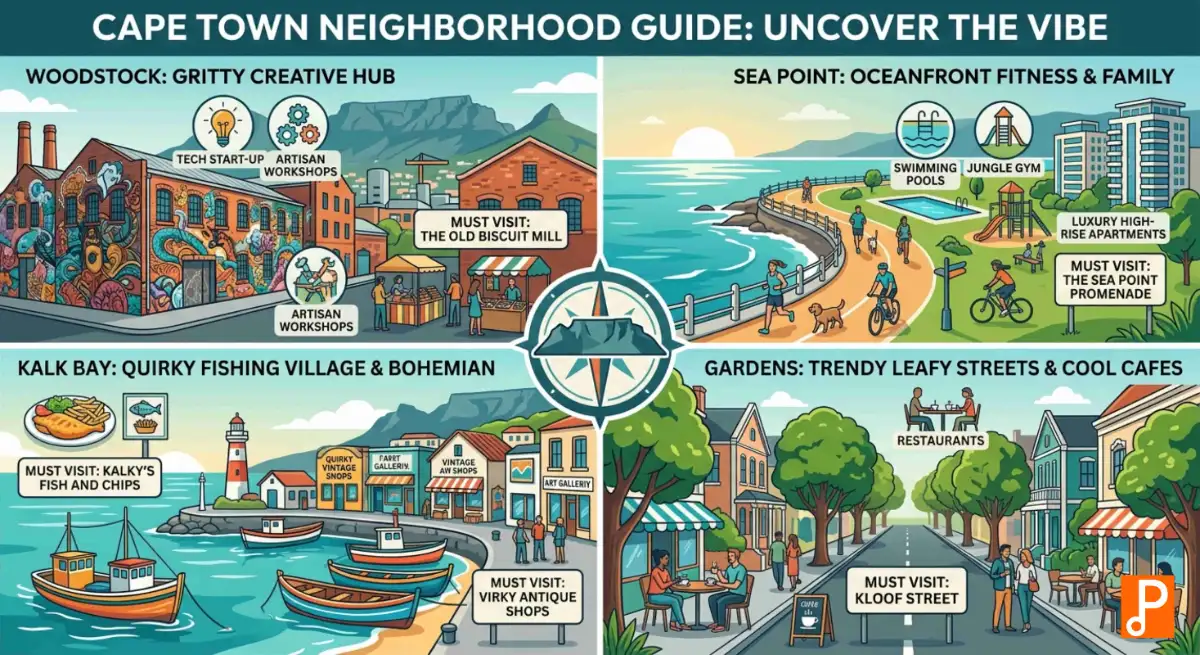
Woodstock The Creative Engine
For those interested in the entrepreneurial spirit of South Africa Woodstock is essential. It is an area that has undergone massive transformation. Once a declining industrial zone it is now home to tech startups art galleries and some of the best street art on the continent. A walk through Woodstock reveals giant murals that address social issues and celebrate African identity. On Saturdays the Neighbourgoods Market at the Old Biscuit Mill becomes the focal point of the city where local farmers and artisanal chefs showcase the best produce of the Western Cape.
Kalk Bay The Hidden Gem for Locals
If you want a slower pace take the train or drive along the coast to Kalk Bay. This is one of the hidden gems in cape town for locals. The main road is lined with antique shops bookstores and independent cafes. Watch the colorful fishing boats come into the harbor with the catch of the day or take a dip in the Dalebrook tidal pool. It is a place that feels frozen in time where the salt air and the sound of the seagulls create a perfect sense of peace.
Practical Wisdom for the Savvy Traveler
Traveling to South Africa requires a bit more preparation than a trip to Europe or North America. Being aware of the local landscape ensures your trip is smooth and safe.
How to Get Around Cape Town Safely
While the city has a public transport system called MyCiti it is limited in its reach. For most visitors the best way to move is via Uber. It is affordable reliable and generally considered the safest way to travel at night. If you are exploring the peninsula hiring a car is a great option as it gives you the freedom to stop at the many scenic overlooks along Chapman’s Peak Drive. This how to get around cape town safely guide suggests avoiding walking in quiet or dimly lit areas after dark even in the tourist districts.
The Best Time to Visit Cape Town for Weather
The best time to visit cape town for weather is undoubtedly between November and March. This is the peak of the South African summer. The days are long and warm and the wind which locals call the South Easter helps clear the city of smog. If you prefer a quieter experience and lower prices consider the shoulder seasons of April or October. The weather is still mild and the landscape is lush and green from the winter rains.
"Cape Town is a place where you can be on a mountain in the morning on a beach at noon and in a world class vineyard by sunset. It is not just a city. it is a lifestyle that demands you slow down and look up."
Adventure Awaits Beyond the City Limits
If you have a few extra days use Cape Town as a springboard for even bigger adventures. The Western Cape is a playground for those who love the outdoors.
The Thrill of Shark Cage Diving
Just a two hour drive from the city is Gansbaai the shark capital of the world. Here you can lower yourself into a reinforced steel cage and come face to face with Great White Sharks or Bronze Whalers. It is a heart pounding experience that gives you a new appreciation for these misunderstood giants of the deep.
Whale Watching in Hermanus
If you are visiting between June and November a trip to Hermanus is non negotiable. It is recognized as one of the best land based whale watching spots in the world. Southern Right Whales migrate to these waters to mate and calve and you can often see them breaching and tail slapping just meters from the shore.
Secure Your Mother City Memories with Plan My Experiences
Planning a trip to a city as diverse and complex as Cape Town can feel overwhelming for first timers. There are so many tours so many restaurants and so many hidden corners to explore. This is where a reliable partner makes all the difference.
Plan My Experiences is the premier African marketplace for booking tours safari experiences accommodation and airport transfers. We specialize in connecting travelers with local experts who know the secret spots that do not make it into the guidebooks. Whether you are looking for a guided hike up the mountain a private wine tour through Constantia or a safe airport transfer to your hotel our platform simplifies the entire process.
By using Plan My Experiences you are not just booking a service. you are supporting the local economy. We work directly with small business owners and independent guides ensuring that your travel spend has a positive impact on the communities you visit. Our platform is easy to use transparent and built by people who live and breathe African travel.
For local tour operators in Cape Town Plan My Experiences offers a global platform to showcase your unique services. It is completely free to list your tours on our site. We only take a commission when you get a successful booking which means we are fully invested in your success.
The Mother City is waiting to uncover her secrets for you. From the peaks of the mountains to the depths of the two oceans let us help you write your own Cape Town story. Visit Plan My Experiences today to start booking cape town tours on plan my experiences and prepare for a journey that will change the way you see the world. Your adventure starts now.