South Africa does not give itself away quickly. It is a country that layers its revelations across the length of your stay, releasing them at a pace that rewards the couple who is paying attention and surprises even the traveller who thought they had done their research thoroughly. You come for the Kruger and the Big Five. You come back for the Winelands light at dusk when the Stellenbosch mountains turn gold and the vineyards below them are still green. You come back again for the Cape at dawn when Table Mountain is clear and the ocean is flat and the city below the mountain has not yet remembered to be complicated.

A detailed seven day safari itinerary in South Africa for a travelling couple is one of the most rewarding routing exercises in African travel because the country is uniquely capable of combining genuinely world class wildlife, genuinely world class wine and food, and genuinely world class urban experience within a single trip that does not require excessive transit time between any of its components. This itinerary connects the Kruger National Park ecosystem in the northeast with the Cape Winelands and Cape Town in the southwest, giving the two of you five days of safari depth followed by two days of Cape immersion that provide the cultural and sensory counterpoint that makes the complete South Africa experience genuinely whole.
Every day below is designed for a couple rather than a group, with specific attention to the moments that are most rewarding when shared between two people who are paying the same quality of attention to the same extraordinary landscape at the same time.
Before You Go — The South Africa Safari Framework for Couples
Understanding the Kruger Ecosystem — Park Versus Private Reserve
The single most important decision a couple makes before booking a seven day South Africa safari itinerary is whether to base their bush experience inside the Kruger National Park itself or in one of the private game reserves that share unfenced boundaries with the park along its western edge: Sabi Sand, Timbavati, Klaserie, and Thornybush among them.
Kruger is the largest national park in South Africa at nearly two million hectares and is accessible to self drive visitors at a cost that makes it the most democratically available premier game reserve in Africa. The private reserves that share Kruger's wildlife are smaller, more exclusive, more expensive, and deliver a categorically different experience. Night drives are permitted in the private reserves. Walking safaris are available. Off road tracking is standard. Vehicle density at sightings is controlled by inter lodge agreements. The guide to guest ratio in a private reserve vehicle is typically four to six guests maximum, which compared to the vehicles you may encounter at a popular Kruger waterhole gives the private reserve experience an intimacy and a quality of wildlife engagement that the couple visiting South Africa for a special occasion or a honeymoon should take seriously as a differentiator.
This itinerary is built around a private game reserve stay for maximum couple experience quality, with guidance on the Kruger self drive option for couples working with tighter budgets.
Day One — Arrival in Johannesburg and the Transfer to the Bush
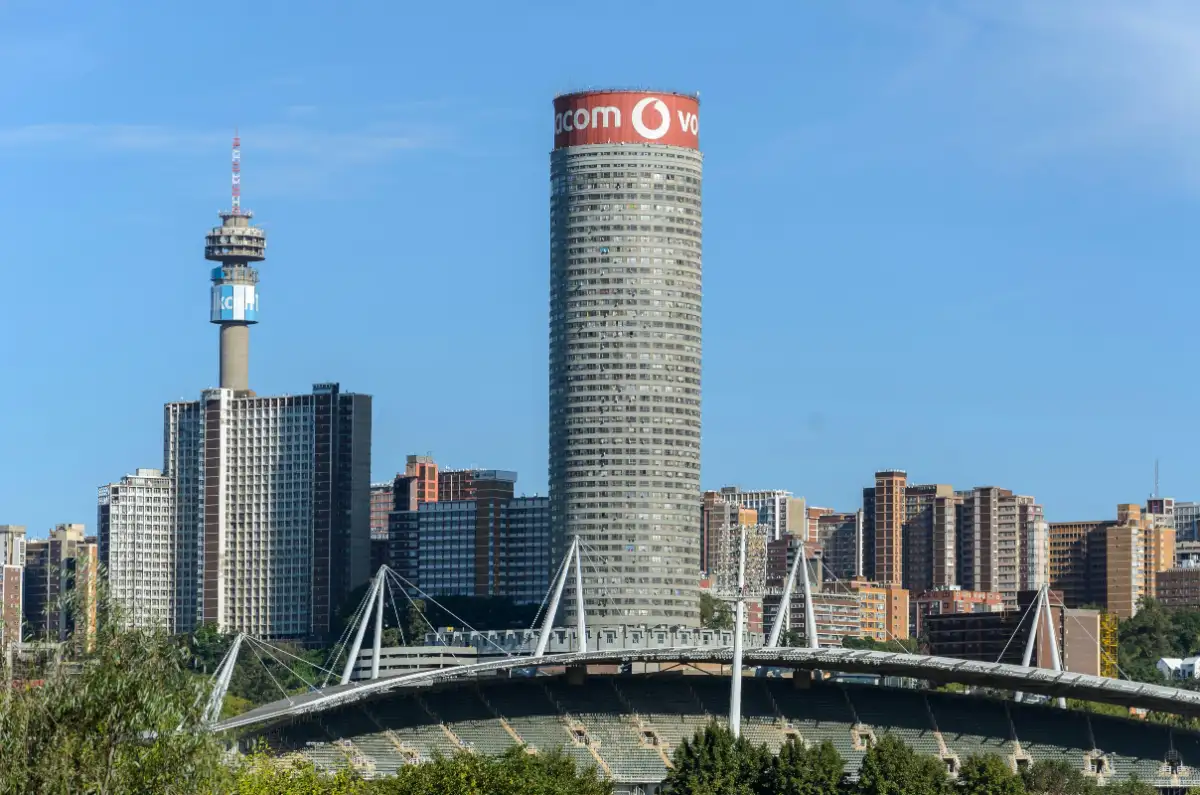
Landing in Johannesburg: The City as Arrival Context
Most couples arriving in South Africa on international flights land at OR Tambo International Airport in Johannesburg, the busiest airport in Africa and the primary hub for onward connections to the safari destinations of the northeast. Johannesburg's reputation as a transit point means that most visitors rush through it toward their next connection without engaging with the city, which is understandable from a logistics perspective and a genuine cultural loss from every other perspective.
For a couple with a morning or early afternoon arrival, a three hour Johannesburg stopover that includes a visit to the Apartheid Museum south of the airport is the most intellectually honest and most specifically South African use of transit time available anywhere in the country. The museum, which opened in 2001 on the site of the Gold Reef City entertainment complex, uses space, light, rusted steel, barbed wire, and the accumulated weight of documented testimony to create an experience of the apartheid era that no amount of prior reading fully prepares you for. Going together, as a couple, through an experience that confronts the deepest moral questions of the twentieth century is a specific kind of shared experience that deepens the context through which everything else in South Africa is subsequently understood.
Afternoon Transfer to the Private Game Reserve
The transfer from Johannesburg to the Sabi Sand or Timbavati private reserves takes approximately five to six hours by road or fifty five minutes by scheduled charter flight. The flight is the recommended option for a couple with the budget to choose it: the aerial approach to the lowveld, as the northeastern bushveld region is known, crosses the Drakensberg escarpment in a way that shows you the dramatic transition from the Highveld plateau to the flat lowland plain in a single visual movement that the road transfer, which passes through the escarpment gradually, cannot produce.
Arrive at the reserve before dusk, check in, attend the brief pre safari orientation your guide conducts before the first drive, and take the evening game drive that most private reserves offer departing between three thirty and four in the afternoon for first night guests.
First Night Bush Dinner
The first night bush dinner, served at a table set up on the game reserve deck or in the boma around the fire, is the moment when the trip transitions from logistics to experience. The fire, the darkness beyond the electric light, the distant sound of something moving in the bush that the reserve staff recognise by ear and the guests are still learning to hear: this is the first shared moment of the South Africa safari experience and it belongs specifically to the two of you in a way that a restaurant dinner in any city cannot replicate. Order the local game meat if it is on the menu. Eat slowly. Listen to what is happening in the dark.
Day Two — First Full Day in the Private Game Reserve: Learning to Read the Bush
 Pre Dawn Departure: The Five Thirty Drive That Sets the Standard
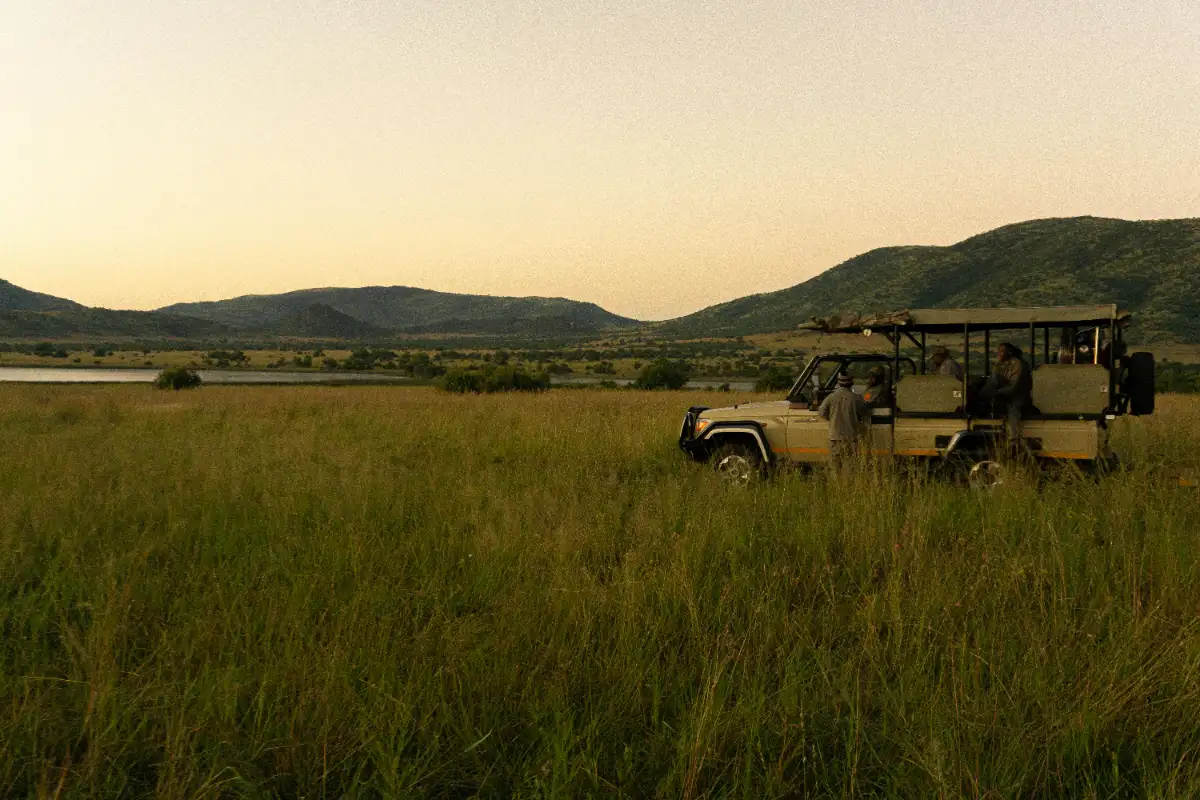
Day two begins at five in the morning. There is no gentle version of this. The pre dawn departure for the first full day game drive in a South African private reserve is simultaneously the most inconvenient and the most rewarding part of the entire itinerary, and the couple who gets into the vehicle before sunrise on this morning and every subsequent morning comes back with a version of the experience that the couple who sleeps in cannot access at any price.
The lowveld dawn operates on a specific sequence. First the temperature drops to its daily minimum in the forty five minutes before sunrise, cold enough to make the blanket across your lap in the open vehicle feel genuinely necessary. Then the sky begins to change, not gradually but in stages: black to deep blue to the specific grey green that precedes colour in the African morning. Then the light arrives from the east and the bush materialises from the darkness around you in increments, the shapes of the marula trees becoming specific, the ant hills casting their first shadows, the dust track you are following turning from invisible to orange in the first direct sunlight of the day.
Your guide will have been reading the tracks and the signs since before you left the vehicle. The first sighting of day two on a South African private game reserve is often the one that triggers the understanding of what this landscape actually is: not a zoo, not a game park in the manicured sense, but a functioning ecosystem where the animals are going about lives of extraordinary complexity that have nothing to do with your presence and to which your presence contributes no disruption because the guide has brought you here quietly and positioned you downwind with the engine off.
Mid Morning: The Walking Safari Experience
Most private reserves in the Kruger ecosystem offer guided walking safaris as an optional activity between the morning game drive and lunch, and for a couple doing a seven day South Africa itinerary this is among the most valuable two hours available on the entire trip. Walking in the African bush with an armed ranger and a tracker removes the vehicle as a barrier and places you inside the ecosystem in a way that has no equivalent.
On foot, the bush reveals a scale that the vehicle conceals. The termite mound that looked modest from the Land Cruiser is taller than both of you when you are standing next to it. The elephant dung on the track, which the guide identifies by freshness and fibre content with a casual expertise that takes years to develop, tells a story about which herd passed here within the last hour. The track of a leopard in the soft sand between the grass tussocks is a physical specificity that no photograph or documentary captures: the actual size of the pad, the actual distance between strides, the actual angle of the claw marks that the tracking ranger reads the way an experienced reader reads a sentence.
Day Three — The Sabi Sand or Timbavati: Going Deeper
Full Day in the Reserve — What the Third Day Reveals
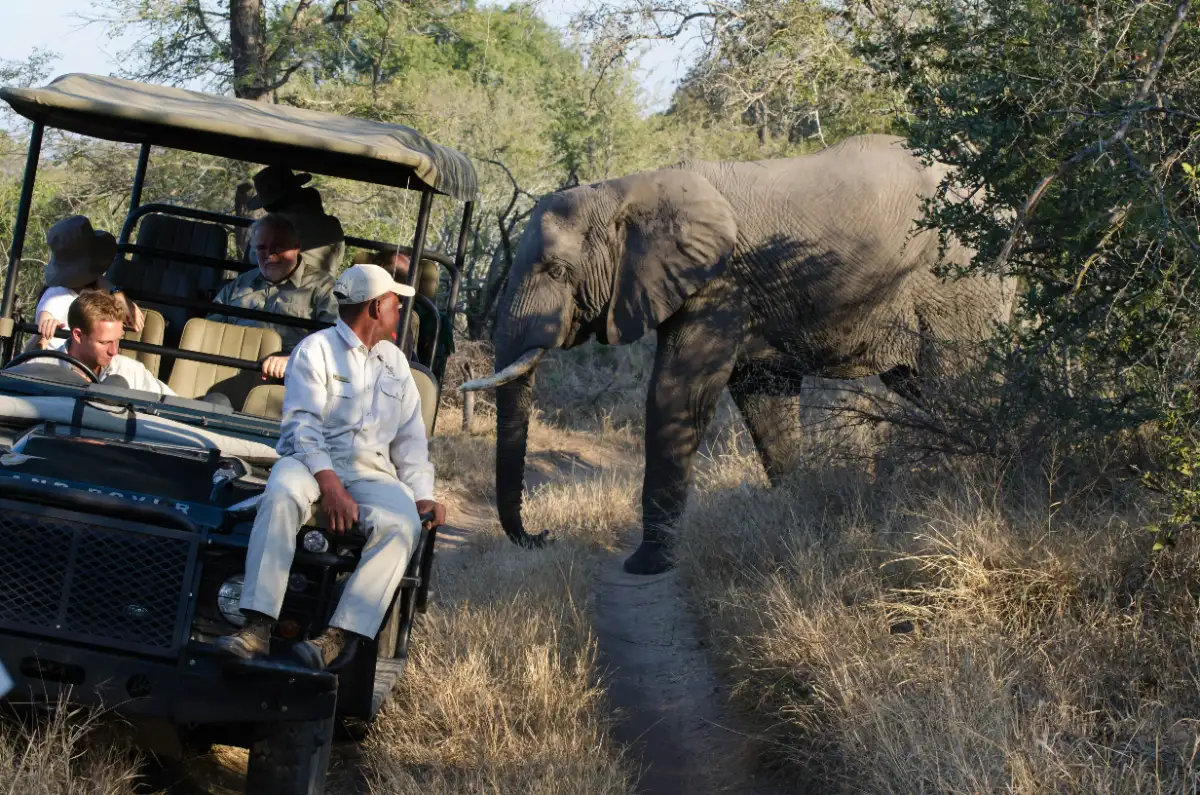
The third day of a private game reserve stay produces something that the first and second days are still building toward: the specific relaxation of a couple who has stopped trying to see everything and started simply being inside the landscape. The best guides in the South African private reserves notice this transition in their guests and respond to it by deepening the experience rather than accelerating it, sitting longer at sightings, explaining more of the ecological context, answering the questions that the first two days of observation have generated.
Day three is also typically the day when a significant sighting occurs that nobody planned for. A leopard carrying a kill up a marula tree fifty metres from the vehicle. A pack of African wild dog moving through the reserve on a route that brings them directly past the breakfast location. A white rhino cow and calf sleeping in the shade of a grove of fever trees at midday, their grey shapes barely distinguishable from the tree trunks in the dappled light. These sightings are not deliverable on schedule. They are the bush's gift to the couple who showed up three mornings in a row before the sun did.
Afternoon: The Night Drive and the Other Africa
The night drive from a South African private game reserve is the definitive example of a landscape that contains two distinct worlds separated by nothing but the presence of the sun. The bush at night operates on a completely different biological schedule from the daytime landscape and the predators and nocturnal species that the afternoon drive did not reveal come fully into activity after dark.
The spotlight operated by your guide or tracker sweeps the bush from the vehicle, catching the eyeshine of a leopard on a termite mound, the orange ember of a civet's eyes in the grass, the extraordinary white blaze of a white tailed mongoose running across the track, the silhouette of a scrub hare sitting in the beam with the specific stillness of something that has decided to remain invisible rather than run. The night drive is the experience that most private reserve guests describe as having produced the greatest surprise per hour of the entire safari component.
Day Four — Private Reserve to Cape Town: The Country Changes Register
Final Morning Game Drive and Departure
Day four begins with one final pre dawn game drive before the mid morning transfer to the nearest airstrip for the flight south to Cape Town. The final morning drive has a specific quality that only the couple who knows they are leaving can feel: a heightened attention to everything, the awareness that this particular landscape will not be immediately available again, and the specific clarity that comes from knowing that the next time you look at this view it will be from memory rather than from the front seat of a game drive vehicle.
The flight from the private reserve airstrip to Cape Town International Airport takes approximately two to two and a half hours and crosses the entire length of South Africa from northeast to southwest, showing you the Highveld plateau, the Drakensberg escarpment, the Karoo semi desert, and finally the Western Cape's coastal mountains as the aircraft begins its descent toward the peninsula. The Cape Peninsula from the air, the narrow finger of land pressing south into the meeting point of two oceans, is a geographical specificity that explains immediately why the Cape was one of the most strategically significant waypoints in the history of human navigation.
Day Five — Cape Town: The Mountain, the Harbour, the City and the Complexity
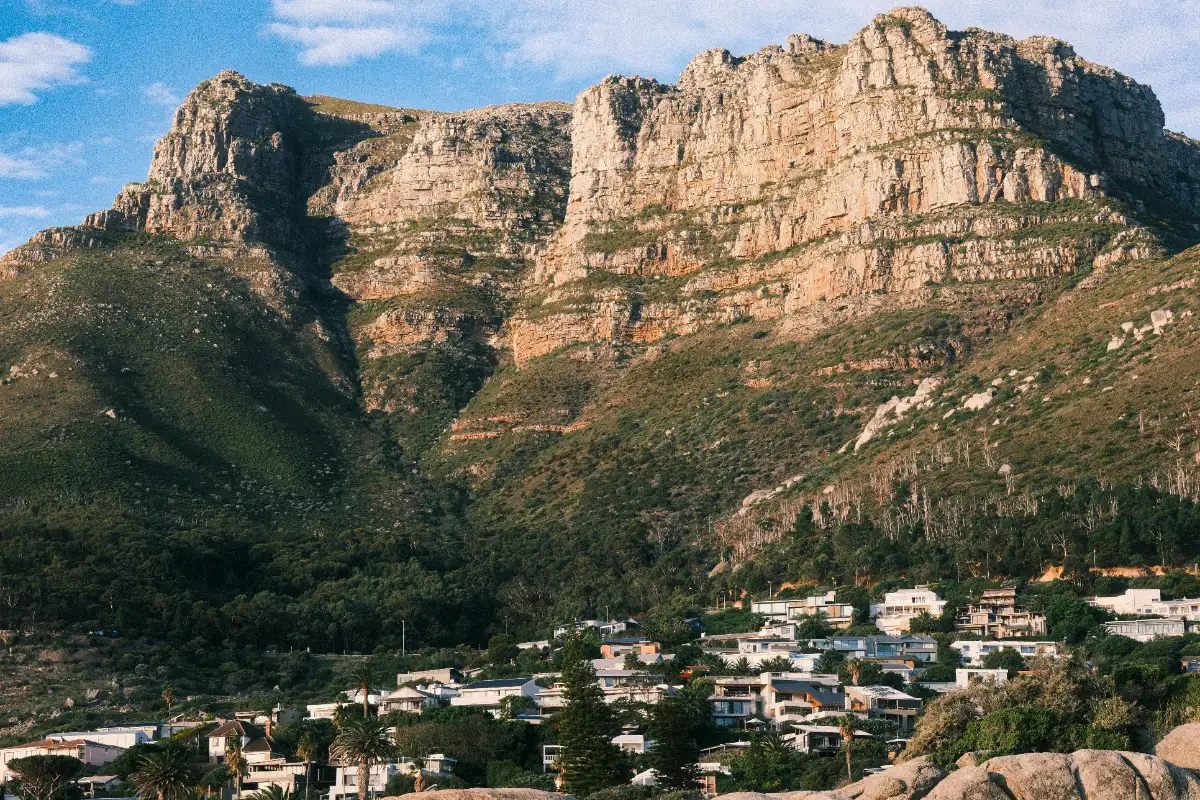
Morning: Table Mountain and the Physical Anchor of the City
Day five begins with Table Mountain. Not the cableway, though the cableway is a legitimate option, but the mountain on its own terms: the physical fact of a flat topped sandstone massif rising one thousand and eighty six metres directly behind a city of four million people with a view from the summit that encompasses the entire Cape Peninsula, both the Atlantic and False Bay simultaneously, and on a clear day the Hottentots Holland Mountains forty kilometres to the east.
The ascent via the Platteklip Gorge trail takes approximately one and a half hours of steady uphill walking and is achievable by any couple with reasonable fitness and proper footwear. The descent by cableway, which most hikers prefer, takes eight minutes and provides an aerial view of the bowl of the city that the ground approach cannot offer. The summit itself, flat and wide and swept by the southeast wind for much of the summer, offers a scale of view that the couple who stood at the edge of the Ngorongoro Crater four days ago and was already recalibrating their understanding of large will find recalibrates it again in a completely different direction.
Afternoon: The V and A Waterfront and the Historical City Bowl
The afternoon of day five is for the city itself. The V and A Waterfront, Cape Town's harbour precinct and the most visited tourist area in Africa by annual visitor count, is worth two hours for the combination of the working fishing harbour, the Zeitz Museum of Contemporary Art Africa housed in the converted grain elevator building, the view of Table Mountain from the harbour basin, and the quality of the food and wine available at the waterfront restaurants that represent the most accessible entry point to the Cape's extraordinary culinary scene.
The Bo Kaap neighbourhood in the City Bowl, with its brightly painted terraced houses climbing the lower slopes of Signal Hill, is a twenty minute walk from the waterfront and represents the most visually specific neighbourhood in Cape Town. The Bo Kaap is the historic home of the Cape Malay community whose ancestors were brought to the Cape as enslaved people and artisans from across Asia, Madagascar, and the East African coast during the Dutch colonial period, and whose cultural contribution to the Cape's food, music, and architectural identity is extraordinary and specific and worth understanding rather than simply photographing.
Day Six — Cape Winelands: The Valley That Produces Some of the World's Most Interesting Wine
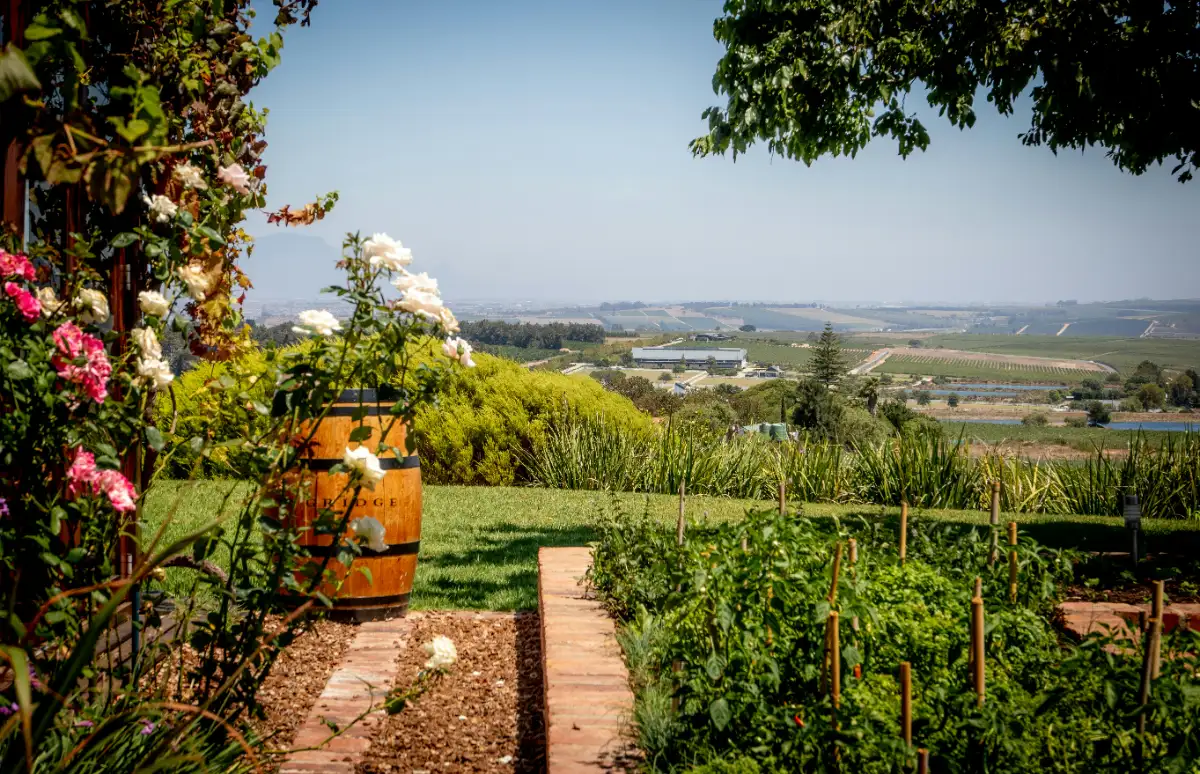
Morning: Stellenbosch and the Architecture of the Wine Estate
The Cape Winelands are approximately forty five minutes east of Cape Town by road and occupy a series of mountain valleys, primarily Stellenbosch, Franschhoek, and Paarl, whose combination of granite soils, Mediterranean climate, and south facing slopes have been producing wine since the first Dutch settlers planted vines at the Cape in 1655. The South African wine industry has undergone a transformation of quality and international reputation since the post apartheid re entry of the country into global wine markets in the mid 1990s, and the Winelands experience available to a couple in 2026 reflects a wine scene of genuine sophistication rather than the novelty attraction it was sometimes treated as in earlier decades.
Stellenbosch is the wine capital of the Cape and its combination of Cape Dutch architecture, oak lined streets, excellent restaurants, and the highest concentration of wine tasting rooms in the country makes it the right base for a Winelands day. The town was established in 1679 and its historical centre retains a quality of preserved colonial architecture that is genuinely beautiful and genuinely specific to the Cape rather than generic European pastiche.
What to Taste and Why the Chenin Blanc Conversation Matters
South Africa's most important contribution to global wine culture is not the Cabernet Sauvignon or the Shiraz or even the Pinotage that was bred specifically in the Cape in the 1920s. It is the Chenin Blanc, a grape variety that makes up the largest planted area in the country and that in the hands of the Cape's best producers produces wines of extraordinary complexity and longevity that have begun to attract serious international critical attention over the last decade. Ask your wine host at any serious Stellenbosch estate for their old vine Chenin Blanc and taste it carefully. The combination of stone fruit, beeswax, and the specific mineral quality that the granitic soils of the Cape produce is unlike Chenin from anywhere else on earth.
Afternoon: Franschhoek and the Valley That Tastes Like France Through an African Lens
Franschhoek, approximately twenty kilometres east of Stellenbosch through the Helshoogte mountain pass, was settled by French Huguenot refugees in 1688 and its name translates as French Corner, a geographical reference that is still enacted daily in the village's food culture, its wine style, and the specific quality of its main street restaurant scene which is, per capita of resident population, the most celebrated food destination in South Africa.
The couple who spends their Winelands afternoon in Franschhoek with a long lunch at one of the village's celebrated restaurants, followed by a late afternoon tasting at a Franschhoek estate, and watches the Franschhoek Valley light change in the hour before sunset when the mountains that ring the valley turn from green to ochre to purple in a sequence that happens faster than feels possible, comes back to Cape Town in the evening with a version of the Western Cape that the mountain and the harbour and the city bowl alone cannot produce.
Day Seven — Cape Peninsula and Departure: The Final South African Morning
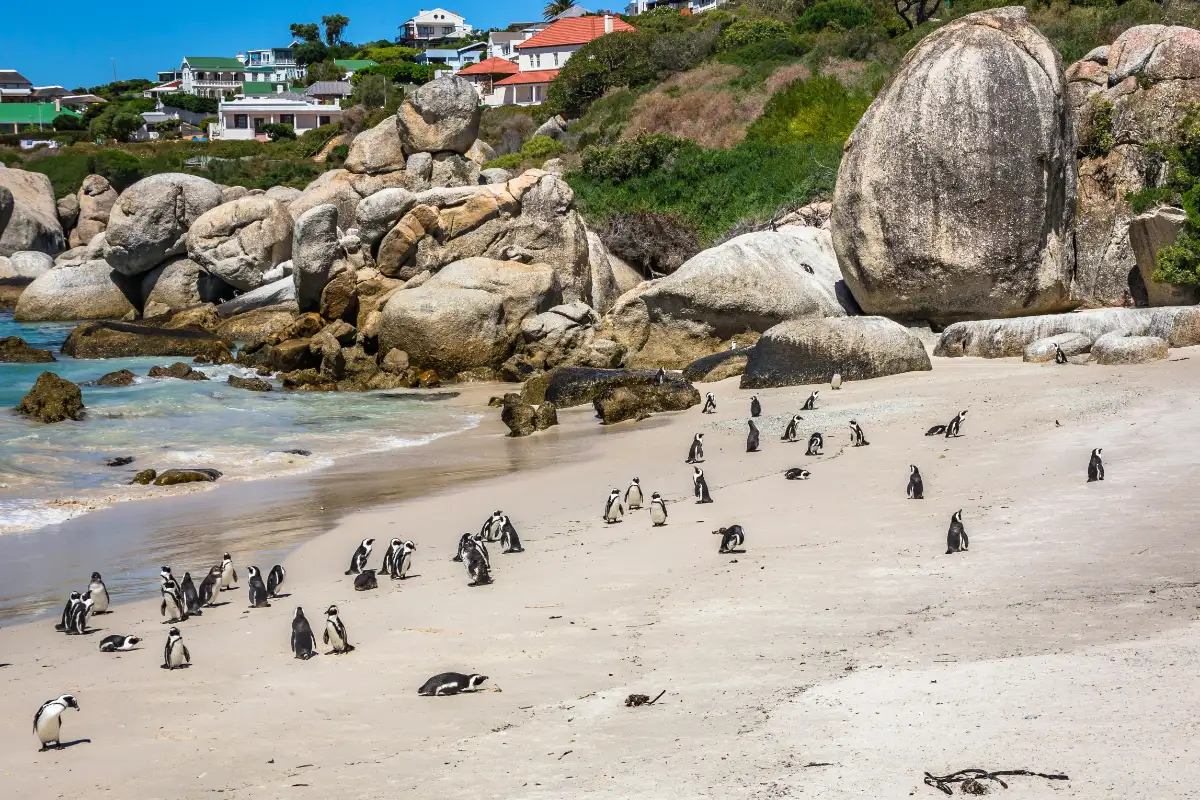
Morning: The Cape Peninsula Drive and Boulders Beach
Day seven, the final full morning of the itinerary, belongs to the Cape Peninsula drive, one of the most spectacular coastal drives in the world and the route that takes a couple from Cape Town southward along the Atlantic Seaboard through Camps Bay, Hout Bay, Chapman's Peak, and around the southern tip of the peninsula to the Cape of Good Hope and then north along the False Bay coast through Simonstown and Boulders Beach.
Boulders Beach is the reason to drive the full peninsula route on the final morning even if the time is tight. A colony of approximately three thousand African penguins has occupied the granite boulder beach here since 1982, establishing a breeding population that is now one of the most visited wildlife attractions in the Western Cape, not because it is the largest or the most dramatic but because the experience of walking along a boardwalk in the company of penguins that are completely indifferent to human observers and going about their business with the complete self possession of animals that have decided this beach is theirs is, for a couple four days removed from watching lions wake up in the Sabi Sand, one of the most delightfully absurd wildlife contrasts available anywhere in the world.
The Cape of Good Hope — The Southernmost Point That Is Not Actually the Southernmost Point
The Cape of Good Hope is not, as many visitors believe, the southernmost point of the African continent. That distinction belongs to Cape Agulhas, approximately one hundred and fifty kilometres to the southeast. The Cape of Good Hope is, however, where the Atlantic Ocean meets the cold Benguela Current that shapes the entire ecology of the Western Cape's marine environment and is, symbolically and historically, the point that Bartolomeu Dias reached in 1488 and named the Cape of Storms before the Portuguese king renamed it the Cape of Good Hope for the optimism that the discovery of a sea route to Asia represented. Standing at the Cape of Good Hope as a couple, looking south at open ocean with no land between you and Antarctica, is one of those moments that does not need explaining or contextualising. It simply needs to be stood in.
Everything a Travelling Couple Needs to Know
The Best Time of Year for a Seven Day South Africa Safari and Cape Itinerary
South Africa's safari and Cape Town seasons operate on different optimal windows and understanding both simultaneously is the most useful planning tool for a couple building this combined itinerary.
The Kruger ecosystem private reserves are most rewarding during the dry winter months from May through September when the vegetation is sparse and the wildlife concentrates around the remaining water sources, making sightings more reliable and the landscape more dramatically spare and specific. The Big Five are present year round but the dry season concentrations produce the most sustained and most photogenic wildlife activity.
The Cape Town and Winelands component is best experienced during the Cape summer from November through April when the weather is warm, the beaches are swimmable, and the wine harvest from February through April produces a specific energy in the Winelands that no other season matches. The shoulder seasons of April to May and September to October offer an attractive compromise: good wildlife conditions in the northeast and pleasant if not summer warm conditions in the Cape with significantly lower accommodation rates at both ends of the itinerary.
How to Get Between the Components of This Itinerary
The primary transport decisions in this itinerary are the transfer from Johannesburg to the private game reserve and the flight from the reserve airstrip to Cape Town. South African domestic airlines including FlySafari, Airlink, and CemAir operate scheduled charter services between the main Kruger area airstrips and Cape Town International with varying schedules depending on the season. The flight from the Sabi Sand or Timbavati area to Cape Town via Johannesburg takes approximately three hours including the connection, or approximately two and a half hours direct on certain charter routes.
Visa Requirements and Health Preparation for South Africa in 2026
South Africa offers visa free entry to citizens of most Western, Southern African, and many Asian countries for stays of up to ninety days. Citizens of other nationalities should check current visa requirements through the South African Department of Home Affairs before travel. Malaria prophylaxis is strongly recommended for the Kruger private reserve component of this itinerary, as the lowveld is a malaria risk area, and should be discussed with a travel medicine clinic at least four weeks before departure. The Cape Town component carries no malaria risk. Comprehensive travel insurance including medical evacuation cover is essential for the safari component.
Budget Guidance for a Seven Day South Africa Safari Itinerary for Two
A seven day South Africa itinerary combining three nights at a private game reserve in the Kruger ecosystem, one night in Cape Town, one night in the Winelands, and two nights of accommodation at Cape Town area properties covers a wide budget range depending on the specific properties chosen.
At the mid range level, budget approximately USD 600 to USD 900 per couple per night for the private reserve component including all meals, game drives, and activities. At the luxury level, private reserve rates range from USD 1,200 to USD 3,500 per couple per night. Cape Town accommodation at five star level ranges from approximately USD 400 to USD 2,000 per room per night. Internal flights within South Africa add approximately USD 400 to USD 800 per couple for the full itinerary. The total all in cost for two people for this itinerary ranges from approximately USD 5,500 at mid range to USD 20,000 plus at the luxury end before international flights.
Book Your Seven Day South Africa Safari Through Plan My Experiences
Why This Itinerary Specifically Needs Local Expertise to Reach Its Full Potential
A seven day South Africa safari itinerary for couples that combines the Kruger ecosystem with Cape Town and the Winelands contains more variables than most couples are equipped to optimise independently: which private reserve to choose among the seven options bordering Kruger, which specific lodges within those reserves offer the best wildlife access and couple specific amenities, which Winelands estates are genuinely worth a tasting versus which are trading on reputation rather than current quality, which Cape Town experiences are worth the morning and which can be skipped without loss.
Plan My Experiences is the premier African travel marketplace connecting ordinary travellers directly with the most knowledgeable, locally embedded, and currently active operators across South Africa. Every guide, lodge, wine tour operator, and experience provider listed on the platform has been vetted for operational quality and community connection. When you search for South Africa safari itinerary recommendations on Plan My Experiences, every result reflects a genuine local assessment rather than a marketing spend.
How to Build and Book This South Africa Safari Itinerary on Plan My Experiences
Visit the Plan My Experiences website and search for South Africa safari itinerary or seven day South Africa safari for couples. The platform surfaces curated options across the Kruger private reserves, Cape Town luxury accommodation, Winelands wine tour experiences, Cape Peninsula guided drives, and all the connecting transfers and internal flights that link the itinerary's components. You can build the full seven day route on a single platform with transparent pricing, verified reviews from couples who completed the same route, and direct communication with the local operators delivering each component.
For South Africa Safari Operators, Guides, and Experience Providers
If you operate game drives, walking safaris, night drives, wine tours, Cape Peninsula experiences, township cultural walks, cooking classes, or any other visitor experience in the Kruger ecosystem, the Cape Winelands, or Cape Town, Plan My Experiences connects you directly with an international audience of travelling couples who are actively planning the kind of itinerary described in this guide.
Listing your experience on the platform is completely free. You set your own pricing, manage your own availability, and present your offering in your own words. Plan My Experiences charges a fair commission only on confirmed bookings, which means the platform grows only when your delivery is good enough to generate the bookings and reviews that attract the next couple. Revenue stays in South Africa, with the guides, the lodges, the wine estates, and the communities whose expertise and landscape make this itinerary worth taking.
Seven Days Is Enough to Fall in Love With South Africa. It Is Not Enough to Finish the Conversation.
The travelling couple who completes this seven day South Africa safari itinerary comes back carrying something that is both specific and difficult to summarise. The leopard on the marula tree is specific. The Stellenbosch valley light at four in the afternoon when the mountains are doing something extraordinary with the available colour is specific. The Bo Kaap and its painted houses and its specific Cape Malay architectural vocabulary is specific. The penguins at Boulders Beach who treated the two of you with the same level of interest they would bring to any other Tuesday are specific.
What is difficult to summarise is the quality of a country that holds all of these specificities simultaneously without resolving them into a single identity, that is simultaneously the African wilderness and the Cape Dutch manor house and the Atlantic Seaboard sunset and the complexity of a post apartheid democracy still in the process of becoming what it chose to be.
Seven days in South Africa is a beginning rather than a conclusion, and the couple who makes this beginning properly, with the right guide in the right reserve and the right table in the right Franschhoek restaurant at the right hour of the afternoon, will spend a significant portion of the years that follow planning how to go back and go deeper.
Start that planning at Plan My Experiences. Find your guide. Book your lodge. Choose your Winelands estate. And give South Africa the quality of shared attention that this seven day itinerary was built to earn