Nairobi was not supposed to be a city. It was supposed to be a supply depot. In 1899, when the British colonial administration set up a temporary railway camp on a stretch of flat, swampy ground between the Rift Valley and the coast, the intention was logistics not permanence. The place was called Ewaso Nai'beri by the local Maasai, meaning place of cool waters, and it had the practical advantage of sitting at an elevation that kept its engineers from dying of malaria at the rate they were dying further down the rail line. One hundred and twenty five years later, what that depot became is a metropolitan area of nearly six million people, the diplomatic capital of an entire region, and one of the most complicated and genuinely fascinating cities in Africa.
A Nairobi city tour done properly is not a checklist of famous buildings and Instagram locations. It is an attempt to read a city that is still in the process of writing itself, a place where the contradictions between colonial history and post independence ambition, between extreme wealth and extreme poverty, between concrete and wilderness, are not smoothed over but lived with, negotiated daily, and occasionally resolved into something unexpectedly beautiful.
For the ordinary traveller who has always treated Nairobi as an airport connecting flight rather than a destination in its own right, this guide is a direct invitation to reconsider. The city has more to say than most people give it time to hear. A well structured Nairobi city tour changes the entire context through which everything else you do in Kenya is understood.
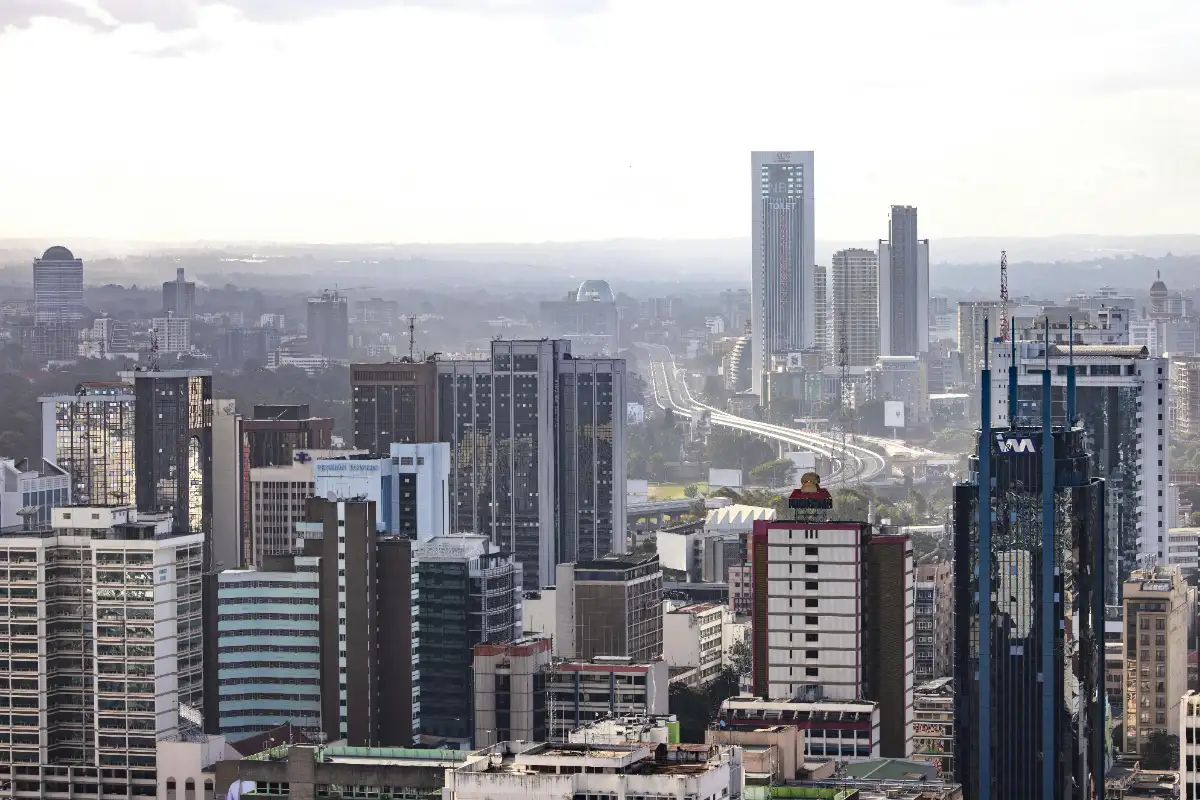
The Nairobi Experiences That Have Earned Their Reputation and Then Some
Nairobi National Park — The Only Capital City on Earth With Lions Inside the City Boundary
The single fact that defines Nairobi's relationship with the natural world more completely than any other is this: the city shares its southern boundary with a fully functioning national park that is home to lion, leopard, cheetah, rhino, buffalo, giraffe, zebra, and over four hundred species of birds. There is no fence on the southern edge of Nairobi National Park. The wildlife moves freely between the park and the Kitengela Conservation Area beyond it. From the northern edge of the park, the Nairobi skyline is visible as a permanent backdrop to every game drive, which produces what is genuinely the most surreal and most photographed juxtaposition in African urban geography.
Including a two hour game drive in Nairobi National Park as part of a Nairobi city tour is one of the most efficient decisions an ordinary traveller can make. The park is twenty minutes from the city centre and opens at six in the morning. A sunrise game drive conducted between six and nine, before the midday heat compresses animal activity into shade, can produce rhino, lion, and cheetah sightings against a skyline that includes the glass towers of Upperhill and Westlands. There is no other city on earth where this particular morning is available.
The Nairobi National Park Game Drive as Part of a Full City Tour
The most satisfying Nairobi city tour itinerary begins with a Nairobi National Park game drive in the early morning, moves to the National Museum of Kenya and the snake park adjacent to it in the late morning, continues to the Karen Blixen Museum and the Giraffe Centre in Karen for the early afternoon, and finishes with a sundowner in Westlands or a walk through the Maasai Market in the late afternoon. This structure gives an ordinary traveller one of the most complete single day urban experiences available anywhere in Africa.
The National Museum of Kenya — Four Million Years of History in One Building
The National Museum of Kenya on Museum Hill Road houses one of the most comprehensive natural history and cultural collections in East Africa and is among the most under visited serious museums on the continent given the quality of what it contains. The palaeontology section alone, featuring fossils from the Lake Turkana basin in northern Kenya that represent some of the earliest known human ancestors ever discovered, is a world class scientific collection that most Nairobi visitors walk past without entering because they did not know it was there.
The ethnographic galleries present the material culture of Kenya's forty two officially recognised ethnic communities through artefacts, textiles, agricultural tools, ceremonial objects, and musical instruments that provide a more honest and more specific account of the country's pre colonial diversity than most guidebooks manage in their introductory chapters. The bird collection of ornithologist Joy Adamson, of Born Free fame, is housed in the museum and represents one of the most comprehensive records of Kenyan avifauna compiled by a single individual in the country's history.
The snake park immediately adjacent to the museum contains live specimens of most of Kenya's venomous snake species in glass fronted enclosures, along with crocodiles and various turtle species. It is not a world class reptile facility by international zoo standards but it is entirely legitimate as an educational resource and particularly valuable for travellers who are about to spend time in the bush and would benefit from being able to visually distinguish a puff adder from a spitting cobra before the distinction becomes practically relevant.
Karen and the Karen Blixen Museum — The Suburb That Carries a Complicated Love Story
The suburb of Karen, named after Danish author Karen Blixen who farmed here from 1917 to 1931, sits in the southwestern reaches of Nairobi where the altitude is slightly higher, the air is slightly cooler, and the roads are lined with jacaranda trees and bougainvillea in quantities that make the area feel like a separate city from the one you drove through to get here.
The Karen Blixen Museum preserves the farmhouse where Blixen lived and wrote as closely as possible to its state during her occupation. The rooms are arranged with her furniture, her books, her agricultural tools, and her personal effects in a way that creates the particular atmosphere of a life that has recently been vacated rather than a period room assembled for display. The Ngong Hills that Blixen described in the opening of Out of Africa as lying there broadside to me, four noble heads, are visible from the garden on a clear afternoon and the view establishes the specific relationship between the farm and its landscape that the memoir describes.
The Karen suburb is worth an afternoon of unhurried movement in its own right. The Giraffe Centre is fifteen minutes away and offers the experience of feeding Rothschild giraffes from an elevated wooden platform at eye level, which sounds like a modest attraction and is in practice an encounter of sufficient warmth and absurdity to produce genuine delight in travellers of every age and disposition.
The Nairobi City Tour Stops That Most Visitors Never Make and Should
Kibera — The Creative Energy Inside the Statistic
Kibera is described in most international media as the largest urban informal settlement in Africa, a framing that is both statistically contested and contextually incomplete. It is a community of approximately two hundred and fifty thousand to one million people, depending on the methodology of the count, occupying a relatively small area of land in the southwestern part of the city in conditions of significant density and limited formal infrastructure. That description is accurate as far as it goes and it does not go very far at all.
What the statistic does not communicate is the degree to which Kibera functions as a genuinely productive creative and entrepreneurial community whose artists, musicians, social entrepreneurs, engineers, and activists have generated national and international recognition in fields ranging from visual art to environmental innovation. The Kibera street art movement, led by artists including Bankslave whose murals address inequality, climate, identity, and political accountability with wit and technical skill of the first order, has brought the neighbourhood's creative voice to international biennales and gallery exhibitions while remaining rooted in the specific walls and streets where it began.
A responsible Kibera community walk, arranged through a guide who lives in the neighbourhood and whose community benefits directly from the visit, is one of the most genuinely human and intellectually stimulating stops available on a Nairobi city tour. You walk streets where murals are painted on schools and barbershops and the sides of market stalls. You visit the informal innovation lab where young engineers are building water purification systems from locally salvaged materials. You eat lunch at the kind of local restaurant that serves the food the neighbourhood actually eats rather than a performance of it. And you leave with a version of Nairobi that the standard city tour itinerary simply does not contain.
The Ethical Standard for a Kibera Walk
The single most important rule for a Kibera community walk is that it must be arranged through an operator with genuine community roots and transparent community benefit arrangements. Ask your operator or guide: does the guide live in or come from Kibera? Does the tour fee include a direct contribution to a community initiative or enterprise? Is the visit conducted with the knowledge of local community leadership? These questions protect both the visitor from a performative extractive experience and the community from the kind of poverty tourism that benefits outsiders at residents' expense.
The Nairobi Railway Museum — Where the City's Origin Story Is Parked on the Tracks
The Nairobi Railway Museum sits near the city's central railway station on Station Road and contains original rolling stock, personal effects, engineering records, and historical documentation from the Uganda Railway, the project that created Nairobi and changed the human geography of East Africa permanently. The museum includes an original steam locomotive from the construction period, a presidential carriage used by visiting British royalty, and a detailed account of the Tsavo man eaters, the two lions who killed and consumed an estimated thirty five workers during the construction of a railway bridge crossing in 1898 and whose skulls are now housed in Chicago's Field Museum.
The Railway Museum is one of the most consistently overlooked stops on any Nairobi city tour and one of the most genuinely interesting. The history of how a temporary railway depot became a capital city in the space of two decades is told here through objects rather than text panels, and the experience of walking through the actual carriages and the actual machinery that built the line gives the city's founding narrative a physical specificity that no amount of reading produces.
Westlands and the Rooftop Nairobi — The City Seen From Where It Is Going
Westlands is Nairobi's most rapidly evolving hospitality and creative district, a neighbourhood that has transformed in the last decade from a mid level residential suburb into the location of the city's most interesting restaurants, rooftop bars, art spaces, creative agencies, and nightlife. It is the part of Nairobi that is most actively building the version of the city that will exist in 2030, and spending an evening there gives an ordinary traveller a window into what the city is becoming that balances the historical weight of the Karen and CBD stops on a day tour.
The rooftop bar culture of Westlands offers one of the most pleasant ways to end a Nairobi city tour day. The light in the late afternoon over the western suburbs, with the Ngong Hills on the horizon and the city stretching in every direction below, is the kind of view that makes the complexity of everything you have experienced during the day fall into a coherence that earlier in the afternoon was not yet available.
Everything an Ordinary Traveller Needs Before and During a Nairobi City Tour
How Long Should a Nairobi City Tour Take?
The honest answer is longer than most itineraries allow. A half day tour covering three to four stops will give an ordinary traveller a surface level familiarity with the city's major landmarks. A full day tour of eight to ten hours covering the national park, the museum district, the Karen area, and one hidden gem stop produces something substantially more dimensional. If your schedule allows two days in Nairobi rather than one, dividing them into a southern circuit covering Karen, the Giraffe Centre, and the national park on day one and a northern circuit covering the CBD, the Railway Museum, Kibera, and Westlands on day two is the structure that most thoroughly rewards the time invested.
Getting Around Nairobi During a City Tour
The most practical transport arrangement for a Nairobi city tour is a private vehicle with a driver who is also, ideally, a knowledgeable guide. The stops on a comprehensive city tour are spread across different parts of the city and the distances between them, combined with Nairobi's notorious traffic, make any attempt to use public transport or multiple separate taxis significantly more complicated and time consuming than a single dedicated vehicle.
Nairobi traffic follows predictable patterns. The major expressways between Westlands, Upper Hill, Karen, and the CBD become seriously congested between seven and nine thirty in the morning and between five and eight in the evening. Planning the Nairobi National Park game drive as the first stop of the day, departing before six, avoids the worst of the morning traffic and positions the rest of the day's movements in the slightly more manageable mid morning period.
What to Wear and Carry on a Nairobi City Tour
Nairobi's altitude of one thousand seven hundred and ninety five metres means its temperatures are more moderate than most visitors expect. Daytime temperatures in the dry season sit between twenty two and twenty seven degrees Celsius and a light layer is useful in the early morning and in air conditioned restaurants and museums. Comfortable walking shoes are essential for any stop that includes a walking component. Carry a small day bag with sunscreen, a water bottle, a light rain layer if visiting during the rainy season, and a small amount of Kenyan shillings for market purchases and tips.
Safety on a Nairobi City Tour
Nairobi has a safety reputation that is partially earned and significantly overstated relative to the experience of most visitors who engage with the city thoughtfully. The practical safety rules for a Nairobi city tour are consistent with those that apply in any large urban environment: use verified transport, avoid displaying expensive items in crowded public spaces, follow your guide's advice about which areas are navigable on foot and which are better approached by vehicle, and carry only what you are comfortable losing.
The most reliable safety measure for an ordinary traveller on a Nairobi city tour is a well connected local guide who knows the city from the inside and whose professional reputation depends on the wellbeing of every person they take through it. This is not a theoretical safety measure. It is a practical one that transforms the city's risk profile entirely.
Book Your Nairobi City Tour Through Plan My Experiences
The Difference Between a Nairobi Drive and a Nairobi City Tour
There is a version of a Nairobi city tour that is essentially a vehicle moving between car parks. You step out, take a photograph of the front of a building, step back in, move to the next location. The driver knows the routes. Nobody knows the city.
There is another version where your guide grew up in the Eastlands neighbourhood and knows the history of the street you are driving through because her grandmother told her, where she takes you to the Railway Museum and explains the Tsavo man eater story from the perspective of the railway workers rather than the colonial engineers, where the lunch stop is at a nyama choma restaurant in Westlands where she is greeted by name and where the food is what she actually orders for herself. These two tours visit the same city and produce completely different experiences of it.
Plan My Experiences is built to make the second version the standard rather than the exception. The platform is the premier African travel marketplace connecting ordinary travellers with the most knowledgeable, community embedded, and personally invested local guides operating in Nairobi and across Kenya.
How to Find and Book a Nairobi City Tour Through Plan My Experiences
Visit the Plan My Experiences website and search for Nairobi city tour. The platform surfaces a curated selection of city tour options across half day, full day, and multi day formats, including specialist tours focused on history, food, art, community, wildlife, or combinations of all of the above. Every listing includes a full description of what the tour covers, who leads it, verified reviews from previous travellers, transparent pricing, and direct communication tools so you can ask specific questions before committing.
You compare options, read real accounts from real travellers, speak directly with your guide before arrival, and book with the confidence that every operator on the platform has been assessed for knowledge, community connection, and the quality of experience they deliver. For a city as layered and as rapidly changing as Nairobi, this level of verified local expertise is not a luxury. It is what makes the tour worth taking.
For Nairobi City Tour Operators and Local Guides
If you lead Nairobi city tours, neighbourhood walks, specialist cultural experiences, wildlife day trips, or any other visitor activity in or around Nairobi, Plan My Experiences connects you directly with a global audience of ordinary travellers who are choosing to extend their time in the city because they believe it has more to offer than a transit night.
Listing your experience on the platform is free. You set your own pricing, manage your own availability, and present your tour in your own voice. Plan My Experiences takes a fair commission only on confirmed bookings, ensuring that the platform's growth is built on the quality of what its operators deliver. Revenue stays in Nairobi, with the guides and communities who know the city well enough to make it genuinely accessible to everyone who arrives with the intention of actually being there.
Nairobi Rewards the Traveller Who Adds a Day
A Nairobi city tour is not what you do while you wait for your safari connection. It is what you do when you have decided that the country you are visiting extends beyond its national parks and that the city which serves as its front door is interesting enough to deserve attention in its own right.
The national park with the skyline behind it. The museum with the oldest human fossil in the world downstairs. The suburb named after a Danish novelist whose farm became a suburb named after her. The community where street artists are making arguments in paint that the rest of the world has begun to listen to. The railway museum where the reason the city exists is parked on tracks that no longer go anywhere.
A Nairobi city tour done with a guide who loves the city for specific reasons and knows how to show you what those reasons look like from the inside is one of the most rewarding days available anywhere in East Africa.
Book it through Plan My Experiences. Give it a full day. Arrive before six for the national park. Stay for the Westlands sunset. And leave knowing a city rather than having passed through one.