You smell Zanzibar before you understand it. The moment the ferry from Dar es Salaam or the aircraft from Nairobi delivers you to the island, there is a note in the air that is part ocean salt, part clove, part something older and harder to name that seems to rise from the coral stone walls of Stone Town itself, as though the buildings are still exhaling the history compressed inside them over seven centuries of trade, conquest, and cultural collision.
Unique things to do in Zanzibar are not hard to find if you know where to look. The difficulty is that Zanzibar's reputation as a beach destination is so thoroughly established in the global travel imagination that most ordinary travellers arrive with a sunscreen and a novel and leave without ever pressing past the shoreline into the island's genuinely extraordinary interior. This guide is written specifically for the traveller who suspects there is more and wants the specific directions to go find it.
What follows is not a list of generic activities. It is a curated navigation of the experiences that separate a forgettable Zanzibar week from the kind of trip that restructures your understanding of what an island can contain: underground history, living spice ecology, marine encounters of the first order, a food culture that has been building complexity for five hundred years, and a forest where an endemic primate found nowhere else on earth watches you from the canopy with calm orange eyes.
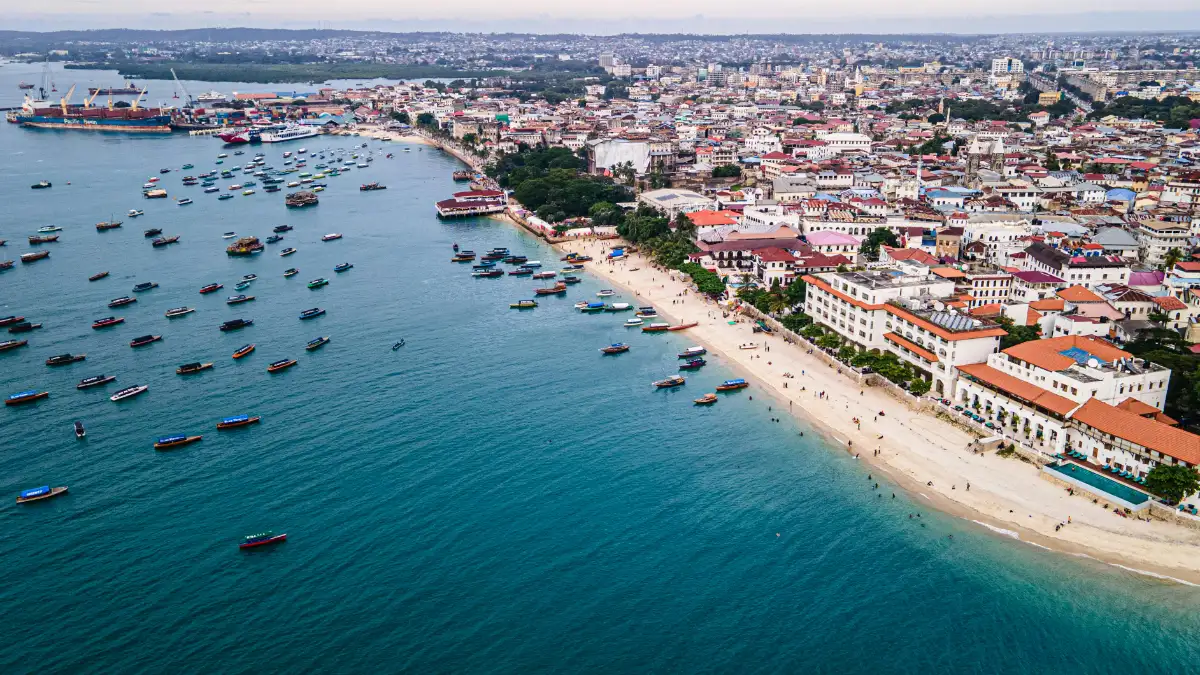
Stone Town and the Layers of History That Most Visitors Only Surface Skim
Walking Stone Town Like a Local — Lanes, Doors, and the Architecture of Accumulated Power
Stone Town, the old city at the western tip of Zanzibar Island and a UNESCO World Heritage Site since 2000, is one of the most architecturally dense and historically complex urban environments in sub Saharan Africa. It was built incrementally over several centuries by successive waves of Omani Arab traders, Indian merchants, Persian administrators, and Portuguese colonisers, each of whom added their own structural and decorative vocabulary to a city that was simultaneously a commercial hub, a slave trade centre, and a place where cultures collided with enough force to produce something entirely new.
The famous carved wooden doors of Stone Town are the most frequently photographed element of the city and the least frequently understood. There are more than five hundred of them and each one is a text. The complexity of the carving, the species of wood used, the height of the threshold, the size of the brass studs, and the specific symbolic motifs in the decorative panels all communicated the wealth, origin, religion, and social status of the household within. Walking Stone Town with a guide who can read these doors is like being handed a key to a library that you previously thought was just a beautiful facade.
The Slave Trade History That Stone Town Cannot Sanitise
The Anglican Cathedral of Christ Church in Stone Town was built in 1873 on the site of the last open slave market in the world, closed that same year under British colonial pressure. The altar stands at the exact location where slaves were whipped to demonstrate their endurance to buyers. The underground chambers where enslaved people were held before sale are open to visitors and represent one of the most important sites of historical conscience in East Africa. Visiting them is not a comfortable experience. It is a necessary one and it reframes everything else you see in Stone Town with appropriate moral weight.
The Forodhani Gardens Night Market — A Food Geography in One Square
Every evening as the sun drops behind the dhow harbour, the Forodhani Gardens on the Stone Town waterfront transforms into one of the most vibrant and genuinely delicious street food environments in East Africa. Zanzibar pizza, which bears no meaningful resemblance to Italian pizza and is in fact a folded crepe filled with spiced meat, egg, cheese, and vegetables cooked on a flat griddle, is the signature item. Around it: fresh grilled lobster and prawns sold by weight, sugarcane juice pressed to order, Zanzibar mix which is a chickpea and coconut broth ladled over cassava chips and served with fresh chilli, and urojo, the famous Zanzibar soup that is one of the most complex and satisfying street food dishes on the continent.
The Forodhani night market is not a tourist performance. It is where Zanzibaris eat in the evenings and the quality reflects that. Arrive at sunset for the best light and the fullest stalls, eat everything that looks unfamiliar, and do not leave until you have tried the Zanzibar pizza in at least two different filling combinations.
The Zanzibar That Exists Beyond Stone Town and the Northern Beaches
A Spice Farm Tour — Walking Through a Living Pantry
Zanzibar earned the title Spice Island through centuries of cultivation of cloves, nutmeg, cinnamon, black pepper, cardamom, vanilla, and a range of other spices that made it one of the most economically significant islands in the Indian Ocean trade network. The clove plantations that cover much of the island's interior are not an attraction in the constructed sense. They are working agricultural landscapes and a spice farm tour moves through them the way a farm visit should: slowly, with your hands in the soil and your nose doing most of the comprehension.
A well led spice farm tour in Zanzibar is an exercise in radical sensory re education. You learn to identify lemongrass by touch, nutmeg by the warmth it leaves on the back of your hand, cloves by a smell so intense and familiar that your brain cannot immediately connect it to the green bud hanging from the tree in front of you. A young guide shins up a tree with no equipment and drops a jackfruit the size of a small child at your feet. Someone cuts it open and the smell is extraordinary and completely unlike the tinned version you may have encountered previously.
Choosing an Ethical Spice Farm
Several spice farm operations in Zanzibar have evolved toward performance rather than agriculture, with imported spices used as props and guides following a scripted routine. The better operations are genuine working farms where the tour is led by a farmer rather than an actor, where the plants are rooted in the ground rather than arranged in pots, and where the interaction is unscripted enough to occasionally include the farmer's grandmother appearing from a doorway to correct something her grandson has explained incorrectly. Ask your operator specifically whether the farm is a working agricultural property before booking.
Swimming With Whale Sharks at Diani or the Pemba Channel
The waters around Zanzibar and the wider Tanzanian coastal zone are among the most reliable locations in the world for encountering whale sharks, the largest fish on earth, in open water. These are filter feeders of enormous gentleness whose mouths are wide enough to swim through but whose interest in humans is approximately zero. Swimming alongside one, watching its slow motion through water so clear you can see the full five to twelve metre length of the animal at once, is the kind of underwater encounter that redefines your relationship with the ocean in a single morning.
Whale shark encounters are seasonal and location dependent. The waters north and east of Zanzibar Island and the deeper channel near Pemba Island to the north are the most reliable zones. Responsible operators follow strict guidelines that prohibit touching the animals, restrict the number of swimmers in the water simultaneously, and maintain a minimum approach distance. Book only with operators who enforce these protocols clearly and without negotiation, as encounters conducted irresponsibly are both harmful to the animals and a significantly worse experience for the swimmer.
Jozani Forest — The Endemic Primate That Owns This Island
Jozani Chwaka Bay National Park in the centre of Zanzibar Island protects the last significant stand of indigenous groundwater forest on the island and is the only place on earth where the Zanzibar red colobus monkey exists in the wild. This endemic subspecies, found nowhere else on the planet, was reduced to fewer than fifteen hundred individuals in the 1990s and has recovered to approximately three thousand through a combination of habitat protection and community conservation initiatives supported partly by tourism revenue.
Walking the trails of Jozani in the company of a red colobus family is a genuinely moving wildlife experience that most Zanzibar visitors miss entirely because it requires a forty minute drive from Stone Town and the motivation to do something other than return to the beach. The monkeys are habituated to human presence and move through the forest canopy and along the ground with complete unconcern for the people watching them. Their rust coloured crowns against the deep green of the forest interior make them among the most photogenic primates in East Africa and among the most overlooked by visitors to one of the continent's most visited islands.
The Mangrove Boardwalk — Jozani's Second Ecosystem
Adjacent to the main forest trail, Jozani contains a mangrove ecosystem accessible via a raised wooden boardwalk that moves through the root systems at close range. Mangrove forests are among the most productive and least appreciated ecosystems on earth, serving simultaneously as fish nurseries, storm protection systems, carbon sinks, and habitat for an extraordinary range of bird and invertebrate species. The Jozani mangrove walk takes approximately thirty minutes and is most rewarding at low tide when the root architecture is fully exposed and the mud below the boardwalk is alive with fiddler crabs and mudskippers doing their extraordinary amphibious business.
A Sunset Dhow Sailing Cruise — Not the Touristy Version
The traditional wooden dhow is the vessel that carried the spice trade across the Indian Ocean for a thousand years and the sight of a dhow under full sail at sunset on the Zanzibar channel is one of the most beautiful things the island offers. There are many versions of a dhow sunset cruise available in Zanzibar and the quality range is considerable. The standard tourist version involves a large motorised vessel with a bar and a DJ. The version worth booking involves a genuinely traditional hand built dhow of modest size, a crew of two or three who sail it by reading the wind rather than turning a key, and a route that takes you away from the Stone Town waterfront into the quieter water south of the city where the horizon is completely empty and the only sounds are the sail and the water.
A traditional dhow sunset requires booking through an operator with access to genuine working vessels and crews. It also requires being on the water no later than five thirty in the afternoon to catch the full arc of the light change from gold to amber to the deep violet that the Indian Ocean produces at dusk with a reliability that feels almost theatrical.
What Every Ordinary Traveller Needs to Know Before Visiting Zanzibar
The Best Time to Visit Zanzibar
Zanzibar has two dry seasons. The long dry season from June through October is the most popular and most reliable period for beach weather, whale shark encounters, and outdoor activities. The short dry season from December through February offers similarly good conditions with fewer visitors and slightly lower accommodation rates. The long rains of March through May and the short rains of November bring daily downpours that make beach activities inconsistent and some roads to the island's interior difficult. The cultural experiences, including Stone Town walking tours, spice farm visits, and Jozani Forest walks, remain viable and sometimes more atmospheric in the rain.
Getting Around Zanzibar
Stone Town and the main northern beach resorts are connected by a road that carries a steady flow of dala dalas, the local minibus taxis that are the most economical way to move between destinations. Shared taxis and private transfers are available for a more comfortable experience. Renting a scooter is popular among independent travellers comfortable with the road conditions, which can be variable. For the more remote parts of the island, a 4WD vehicle with a local driver is the most practical and enjoyable option.
Cultural Respect and Dress Code in Zanzibar
Zanzibar is a predominantly Muslim island and visitors are expected to dress modestly when moving through Stone Town and inland villages. Shoulders and knees should be covered in public spaces away from the beach. Swimming costumes belong on the beach and not on the streets or in markets. This is not an onerous requirement. It is a reasonable and easily met expectation from a community whose hospitality toward visitors is genuine and whose cultural practice deserves the basic reciprocity of being taken seriously.
Book Your Zanzibar Experience Through Plan My Experiences
Why Local Knowledge Makes the Difference in Zanzibar
The gap between a mediocre Zanzibar trip and a genuinely exceptional one is almost entirely a function of who shows you around. The island is small enough that all the famous sites are accessible to any visitor with a map and a vehicle. But the carved door in Stone Town whose owner will invite you in for tea if you stop long enough to ask about it, the spice farm where the farmer's wife serves a lunch that recalibrates your understanding of Swahili cuisine, the fishing village south of Paje where a community whale shark monitoring programme welcomes visiting swimmers who want to participate rather than just observe — none of these appear in a standard booking.
Plan My Experiences connects ordinary travellers directly with the most knowledgeable, community embedded local operators, guides, and experience providers in Zanzibar and across the broader East Africa region. Every listing on the platform represents a real person with genuine expertise, verified by traveller reviews and assessed for community benefit and operational quality.
How to Find and Book Zanzibar Experiences on Plan My Experiences
Visit the Plan My Experiences website and search by destination or activity type. Whether you are looking for a Stone Town guided walk with a historian, a spice farm tour led by a working farmer, a traditional dhow sailing experience, a whale shark snorkelling trip with a responsible marine operator, or a Jozani Forest walk with a community guide whose family has lived adjacent to the park for three generations, the platform surfaces the right option with full information, transparent pricing, and direct communication tools.
You compare operators, read verified reviews, ask specific questions, and book with the confidence of knowing that every experience listed has been held to a standard that generic booking platforms do not apply.
For Tour Operators, Guides, and Experience Providers in Zanzibar
If you run a cultural tour, a marine experience, a spice farm, a cooking class, a dhow sailing operation, or any other tourism service in Zanzibar, Plan My Experiences gives you a direct connection to a global audience of travellers who are actively looking for exactly what you offer and who are motivated by quality and authenticity rather than the cheapest available price.
Listing your experience on the platform is free. You control your pricing, your availability, and how your experience is presented. Plan My Experiences charges a fair commission only when a booking is confirmed, which means the platform succeeds only when you do. Revenue stays in Zanzibar, with the operators and communities who create the experiences that make the island worth visiting.
Zanzibar Rewards the Traveller Who Goes Further Than the Shore
Unique things to do in Zanzibar are not exotic or difficult to access. They simply require the intention to look past the obvious. The beach is real and it is genuinely beautiful and you should absolutely spend time on it. But the island that waits behind it — the island of carved doors and slave trade conscience, of spice ecologies and endemic primates, of street food built from five centuries of cultural collision and an ocean full of the largest fish on earth — is a deeper and more durable gift.
The ordinary traveller who visits Stone Town with a historian, walks Jozani with a community guide, swims alongside a whale shark with a responsible operator, and eats Zanzibar mix at a Forodhani stall at nine in the evening goes home with something that a beach week alone cannot produce: the feeling of having actually been somewhere rather than simply having arrived and departed.
Start building that version of your Zanzibar trip at Plan My Experiences. Search by activity, find your local expert, book with confidence, and discover what the island reveals when you give it the attention it has always deserved.