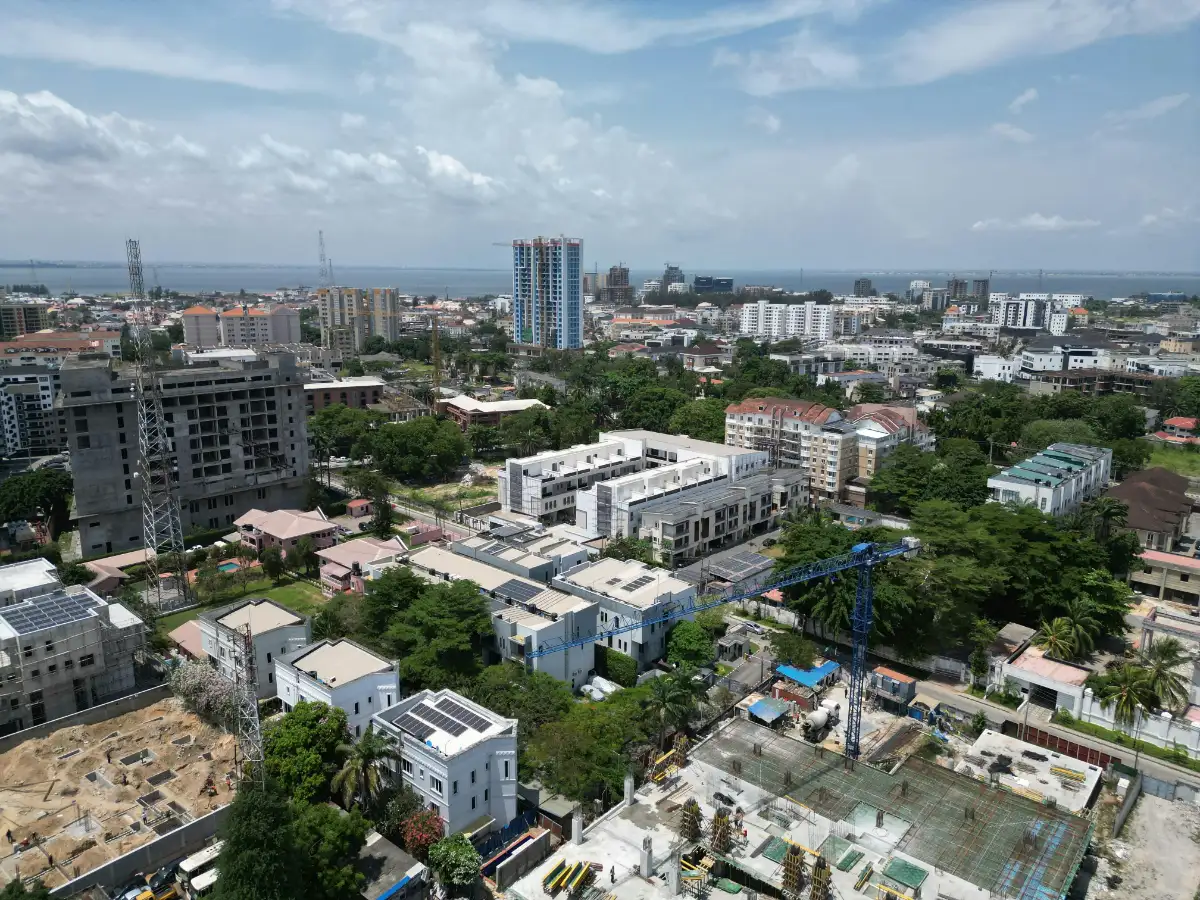
Lagos hits you before you can prepare. The moment the aircraft door opens at Murtala Muhammed International Airport and the thick warm air of the Atlantic coast moves into the cabin, something changes in the pressure of the day. The drive into the city from the airport is a masterclass in concentrated human energy: twenty one million people compressed into a coastal metropolitan area that should not work by any reasonable urban planning standard and yet produces, through some combination of necessity and genius and sheer collective will, one of the most creatively and commercially productive cities on the African continent.
Unique things to do in Lagos are not rare. They are everywhere, operating simultaneously across a city that runs on multiple registers at once: the Afrobeats industry redefining global popular music from studios in Lekki while fishermen on the Lagos Lagoon pull nets in the same way their great grandparents did, while tech founders in Yaba build companies valued in the hundreds of millions while street food vendors in Balogun serve the best suya you will eat in your life from a charcoal grill that has been in the same location since before independence.
For the ordinary traveller who is accustomed to cities that sit still long enough to be photographed, Lagos requires an adjustment of expectation. This is not a city that poses. It is a city that moves, and the experiences in this guide are the ones that put you inside that movement in the most interesting, most authentic, and most genuinely memorable ways available.
The Lagos Experiences That Deserve Every Word Written About Them
The Nike Art Gallery — The Largest Private Art Collection in West Africa Inside One Building
The Nike Art Gallery on Lekki Road is not a gallery in the white walls and careful lighting sense that the word implies in a European context. It is a five storey building in the Lekki area of Lagos that was assembled over decades by Chief Nike Davies Okundaye, a textile artist, entrepreneur, and cultural institution whose personal commitment to preserving and promoting traditional Nigerian and West African art forms has produced one of the most extraordinary private collections on the continent.
The collection spans several floors and includes Yoruba beadwork of museum quality, traditional indigo dyed adire textiles in patterns that encode specific historical and spiritual narratives, bronze sculpture, contemporary painting by Nigerian artists working in a range of styles that reflect the collision between traditional Yoruba visual grammar and the global influences that pour into Lagos from every direction, hand woven Kente cloth from across the West African region, and a workshop space where visiting artists and students work in plain sight of visitors.
The Nike Gallery is not curated in the distancing, don't touch, read the label way of formal museum practice. Chief Nike herself is frequently present and has been known to sit and talk with visitors for extended periods about specific pieces, their origin, their meaning, and the communities whose cultural practice produced them. The experience of moving through the gallery with a knowledgeable guide who can decode the symbolic language of the adire patterns or explain the historical context of a specific bronze form is categorically different from moving through it alone and is one of the most intellectually rich hours available to a first time visitor to Lagos.
The Rooftop View and What It Tells You About Lagos
The upper floor of the Nike Gallery opens onto a rooftop area from which the visual complexity of Lagos spreads in every direction: the Atlantic to the south, the lagoon to the north, the dense residential neighbourhoods of Lekki pressing outward in every direction, the construction cranes of Eko Atlantic rising on reclaimed land at the shoreline. This view, available for free to any gallery visitor, is one of the most concentrated expressions of what Lagos is in the process of becoming and worth spending ten minutes with even if you are not an art person.
Suya, Jollof, and the Lagos Street Food Education
Lagos has one of the most complex and genuinely extraordinary street food cultures in Africa and the ordinary traveller who eats only in hotel restaurants is leaving the most important conversation the city is having with visitors entirely unattended.
Suya is the starting point. These are thin strips of beef, ram, or chicken marinated in a spiced groundnut powder paste called yaji and grilled over charcoal on long skewers, served wrapped in newspaper with raw onion, sliced tomato, and additional yaji on the side. The best suya in Lagos is not found in restaurants. It is found at roadside mallam stalls operating from after dark until two or three in the morning, often in the same location they have occupied for fifteen years, their regular customers arriving by motorcycle taxi and expensive car with equal reliability.
Jollof rice, the subject of the most passionately contested culinary debate in West Africa and the dish that Nigerian cooks will tell you flatly and without hesitation is the original and superior version of the regional classic, is available everywhere in Lagos from plastic bowl street portions to elaborate ceremonial preparations at weekend parties that function as the social infrastructure of the city. The agege bread baked in cylindrical loaves and eaten at breakfast with akara bean cakes fried in palm oil is one of the most satisfying morning meals in West Africa. The pepper soup, a thin and extraordinarily fragrant broth prepared with goat offal or catfish and a specific blend of spices that has no direct equivalent in any other culinary tradition, is the dish that Lagos uses to assess whether a visitor is serious.
A guided food tour of Lagos that moves through the street food landscape of at least two or three distinct neighbourhoods is one of the most compressed and enjoyable educations in Nigerian culture available without a university enrollment.
The Lagos That Exists Below the Surface Noise
Lekki Conservation Centre — The Canopy Walk Above the Mangroves
The Lekki Conservation Centre sits on eighty three hectares of wetland and mangrove forest in the Lekki area of Lagos, a fact that seems impossible given its location inside one of the most densely populated urban zones in Africa. The centre is managed by the Nigerian Conservation Foundation and is home to a resident population of green mambas, monitor lizards, crocodiles, West African dwarf crocodiles, and a range of bird species that use the mangrove corridor as a stop on the West African flyway.
The main attraction for most visitors is the canopy walkway, a five hundred and sixty metre suspended bridge system that moves through the forest canopy at heights of up to twenty two metres above the ground. Walking the canopy walk on a quiet weekday morning, when the city below is doing its loudest work, and listening to the forest above the city doing something entirely different is one of the most genuinely disorienting and satisfying contrasts that Lagos produces. The green mamba population resident in the canopy trees is real and worth knowing about in advance. They are not aggressive toward humans who do not disturb them and the walkway is designed with this in mind. Your guide will know where they typically rest and will point them out from the appropriate distance.
The Best Time to Visit the Lekki Conservation Centre
Go on a weekday morning between eight and ten to avoid both the midday heat and the weekend visitor crowds that can make the canopy walkway feel more like a queue than an experience. The bird activity is most intense in the early morning and the light through the mangrove canopy at this hour has a quality that afternoon visits do not replicate. Bring binoculars, insect repellent, and closed shoes with a reasonable grip.
Makoko — The Floating Community and What It Asks of the People Who Visit It
Makoko is a waterfront community built on stilts above the Lagos Lagoon that has existed in various forms for over two hundred years, originally established by Egun fishing communities from the Republic of Benin who settled along the shoreline and gradually extended their homes outward onto the water as the land behind them filled up. Today it is home to an estimated one hundred thousand people living in houses built on wooden poles above the lagoon, connected by narrow water channels navigated by dugout canoes that function as the neighbourhood's roads.
Makoko has attracted enormous international media attention, most of it focused on its poverty and its precariousness rather than on the remarkable social organisation, cultural cohesion, and economic productivity of a community that has survived two centuries of urban pressure, colonial administration, and multiple government demolition orders by developing social bonds and community structures strong enough to withstand each of them.
A responsible visit to Makoko, arranged through a community guide who lives there and whose community benefits directly from the tourism revenue, is one of the most complex and genuinely thought provoking experiences available in Lagos. You arrive by canoe. You move through channels lined with children who are swimming and playing and going about the business of growing up in an environment so particular and so self contained that it constitutes its own city within the city. You leave with questions that take longer to process than the visit itself.
The Ethical Standard for a Makoko Visit
The critical requirement for a Makoko visit is that it is arranged through an operator with genuine community roots rather than an outsider running tours of another community's poverty for profit. Ask your guide or operator the following questions before booking: does the guide live in or come from Makoko? Does a portion of the tour fee go directly to the community? Is the visit conducted with the knowledge and endorsement of community leadership? The answers to these questions are the only reliable indicator of whether the experience you are about to have is an ethical one.
The Balogun Market Textile District — A Kilometre of Fabric and Everything It Contains
Balogun Market on Lagos Island is the largest market in Nigeria and one of the most intense commercial environments in West Africa. It covers several city blocks and within those blocks the textile district contains more varieties of African fabric than most people knew existed: Ankara wax print in every pattern and colourway produced in the last century, Swiss voile, Aso Oke hand woven cloth in traditional Yoruba patterns used for ceremonies and celebrations, lace from Austria and Switzerland sold by the metre to Lagos dressmakers who will turn it into something spectacular within forty eight hours, and George fabric from India that has been absorbed into southeastern Nigerian ceremonial dress culture so completely that most people who wear it consider it fully Nigerian.
The Balogun textile district is best experienced with a local guide who knows the specific lanes where the best fabric merchants operate and who can negotiate on your behalf in a market where the opening price bears almost no relationship to the transaction price and where the skill of the negotiation is itself a form of social respect. Buying fabric in Balogun and then commissioning a Lagos tailor to make something from it within your stay is one of the most satisfying and specifically Lagos things an ordinary traveller can do.
Afrobeats Lagos — Experiencing the Music That Is Rewiring Global Pop Culture
Afrobeats is the most globally influential musical export to come out of Africa in the last twenty years and its creative centre, production infrastructure, and living performance culture are concentrated in Lagos. The studios of Lekki and Ikeja have produced Burna Boy, Wizkid, Davido, Tiwa Savage, and a generation of artists whose music is now charting in the United States, the United Kingdom, and across Europe with a regularity that would have seemed impossible a decade ago.
For the ordinary traveller, experiencing Afrobeats in Lagos is not complicated. The city's live music and nightlife scene is one of the most active in Africa, with venues ranging from intimate live music rooms in Victoria Island and Lekki to open air concerts and festival events that run through the weekend. The New Afrika Shrine in Agege, established by Femi Kuti as a continuation of the legendary Afrika Shrine of his father Fela Kuti, hosts live performances every Friday and Sunday night that are among the most authentic and culturally significant music experiences available anywhere on the continent.
What Every Ordinary Traveller Needs to Know Before Visiting Lagos
Getting Around Lagos Without Losing Your Entire Day to Traffic
Lagos traffic is legendary and the legend is accurate. The city sits on a series of islands and peninsulas connected by bridges and expressways that create bottlenecks of impressive consistency at almost any hour of the day. The Third Mainland Bridge, which connects Lagos Island to the mainland across the lagoon, is one of the longest bridges in Africa and one of the most reliably congested roads in Nigeria.
The practical strategies for managing Lagos traffic as a visitor are straightforward. Plan your daily movements to avoid the main rush hour periods of seven to ten in the morning and five to eight in the evening. Use water taxis, called ferries or water buses, to cross the lagoon between Lagos Island and the mainland when the departure and arrival points suit your itinerary. They are faster than road transport by a factor of three during peak hours and the lagoon crossing itself is one of the more atmospheric experiences available in the city. Ride share applications including Bolt and inDriver operate widely in Lagos and provide safer and more price predictable transport than street taxis.
Neighbourhoods at a Glance
Victoria Island and Ikoyi are the most infrastructure rich areas for first time visitors, with good hotels, established restaurants, and relatively walkable streets within their immediate precincts. Lekki Phase One is the address of the Nike Gallery, good nightlife, and a range of mid range dining options. Lagos Island including the Balogun Market area and the historic streets around Tinubu Square is the commercial and historical heart of the original city and is best visited with a guide during daytime hours. The mainland areas including Yaba, known as Nigeria's Silicon Valley, and Agege, home of the New Afrika Shrine, offer dimensions of the city that are less frequently visited by international travellers and more revealing of how the majority of Lagos residents actually live.
Safety in Lagos — The Balanced Reality
Lagos has a safety reputation among international travellers that is shaped more by media coverage of Nigeria's broader security challenges than by the specific experience of visitors to the city. The vast majority of ordinary travellers to Lagos move through their visit without incident by applying the same awareness that sensible travel in any large, economically complex city requires.
Avoid displaying expensive jewellery, cameras, or phones ostentatiously in public. Use verified ride share applications rather than unlicensed taxis. Travel with a local guide for market visits and unfamiliar neighbourhoods, particularly on your first day in the city before you have developed a working spatial understanding of how the different areas relate to each other. Carry a local SIM card for communication and a small amount of naira cash for street food and market purchases. Stay informed about any current specific security advisories from your country's foreign ministry but apply those advisories proportionally rather than allowing generalised caution to prevent you from engaging with a city whose hospitality toward visitors is, in the specific experience of most travellers who go, significantly warmer than the reputation suggests.
The Best Time to Visit Lagos
Lagos is a year round destination with a tropical climate moderated by its Atlantic coastal position. The dry season from November through March is the most comfortable period for outdoor activity, with lower humidity and consistent sunshine. The harmattan wind blows from the north between December and February, bringing dry dusty air from the Sahara that reduces visibility and creates a haze over the city but also a particular atmospheric quality that photographers find compelling. The rainy season from April through October brings heavy downpours, particularly in June and July, that can cause significant flooding in low lying areas and make road transport substantially more difficult. October marks the transition into the dry season and is one of the most pleasant months in the city.
Book Your Lagos Experience Through Plan My Experiences
Why Lagos Requires a Local Who Actually Lives the City You Are Trying to Find
Lagos is a city of twenty one million people and the version of it that an ordinary traveller finds without local guidance and the version that exists for someone who grew up navigating its internal logic are so different that they might as well be different cities. The suya stall that the Lagos guide takes you to at eleven thirty at night, because that is when it is best, is not findable on any map application. The fabric merchant in Balogun who gives the honest price rather than the visitor price because the guide has been buying from her for eight years is not identifiable without that relationship. The Sunday night at the New Afrika Shrine where the specific energy of the room matches the music being played is something you only know to arrive for if someone told you.
Plan My Experiences exists to make those connections available to ordinary travellers without the years of local residency that would otherwise be required to find them. The platform is the premier African travel marketplace connecting visitors directly with the most knowledgeable, community embedded, and personally invested local guides and experience operators working in Lagos and across Nigeria.
How to Find and Book Lagos Experiences Through Plan My Experiences
Visit the Plan My Experiences website and search for Lagos or Nigeria. The platform surfaces a curated selection of experiences across the city's most compelling categories: Nike Art Gallery guided visits, street food tours of specific neighbourhoods, Makoko community visits with ethical local guides, canopy walks at Lekki Conservation Centre, Balogun Market textile tours, live Afrobeats music experiences, and personalised full day Lagos itineraries built around your interests and schedule.
Every listing includes complete information about what the experience involves, who leads it, what previous travellers said about it, and exactly what it costs with no hidden fees. You communicate directly with the operator before booking, arrive in Lagos knowing exactly who you will be spending time with, and leave with the kind of experience that could only have been delivered by someone who genuinely knows the city from the inside.
For Local Guides and Experience Operators in Lagos
If you lead food tours, art experiences, market walks, music events, community visits, cultural experiences, or any other visitor activity in Lagos or anywhere in Nigeria, Plan My Experiences gives you direct access to an international audience of ordinary travellers who are choosing Lagos specifically because they want to experience the city authentically rather than at a safe and sanitised distance.
Listing your experience is completely free. You control your pricing, your availability, and your presentation in your own voice. Plan My Experiences charges a fair commission only on confirmed bookings, which means the platform is financially motivated to send you travellers who convert into bookings rather than browsers. Revenue stays in Lagos, with the guides and operators and communities who make the city what it is, and with the small businesses that serve as the real infrastructure of Nigerian tourism.
Lagos Will Not Wait for You, But It Will Reward You Completely If You Keep Up
Unique things to do in Lagos are not scheduled or contained. They happen at midnight at a suya stall when someone at the next table starts a conversation that lasts two hours. They happen in the fourth floor of the Nike Gallery when Chief Nike herself walks in and sits down across from you and begins describing the history of a piece you were looking at as though the explanation is the most natural thing in the world. They happen on the canopy walk when you look down through the mangrove canopy at the lagoon below and Lagos, for the first time, goes completely quiet.
This city rewards the ordinary traveller who arrives ready to move at its pace, eat its food without reservation, follow the recommendation of the local guide without asking for the Tripadvisor rating, and stay out an hour later than planned because the music is doing something that cannot be paused.
Lagos will not arrange itself for your convenience. But it will give you everything it has to anyone paying the right kind of attention, and what it has is extraordinary.
Start your Lagos journey at Plan My Experiences. Find your guide, book your experience, and show up ready for a city that has been waiting, loudly and without apology, for exactly this kind of visitor.