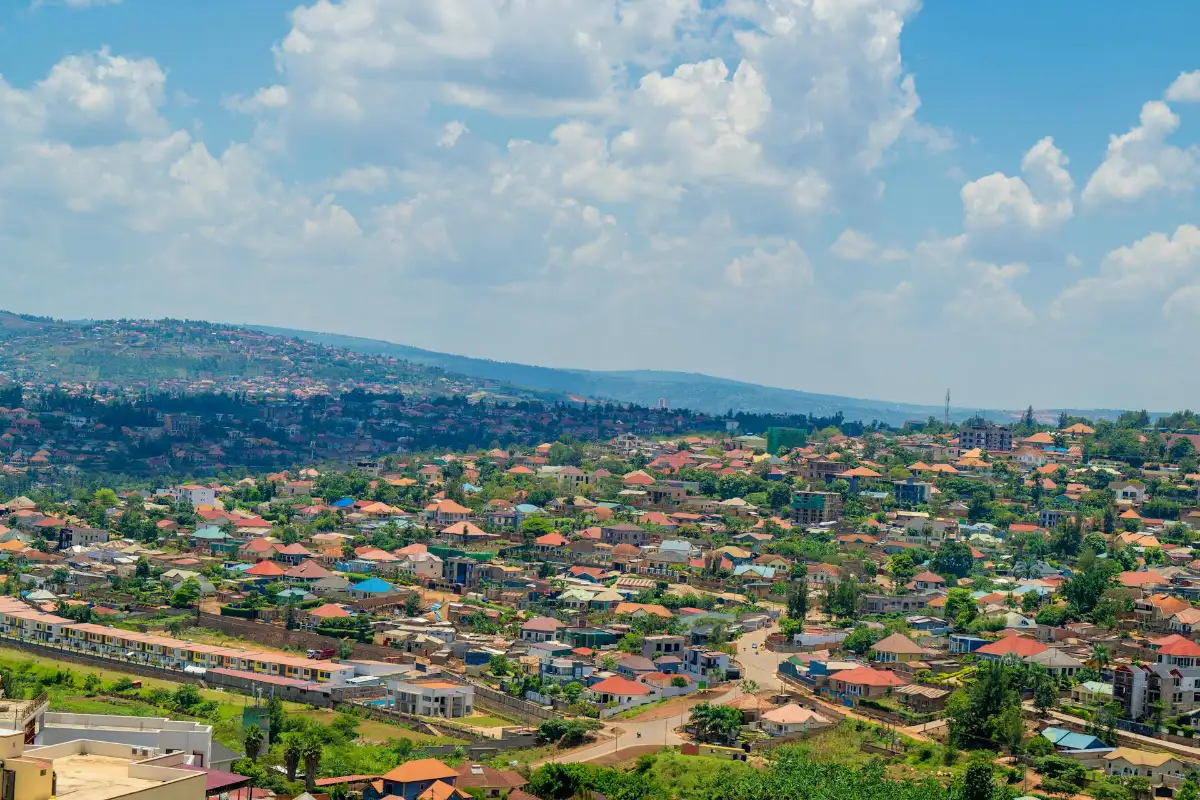
Kigali is immaculate. Not in the way of a city that has been cleaned for an event and will return to its ordinary state the morning after, but in the way of a city that has made cleanliness a structural commitment backed by national legislation and community enforcement that has been sustained for over two decades. The streets are swept before the sun comes up. The grass at the roundabouts is cut on a schedule that a Swiss groundskeeper would find impressive. The air above the city, which sits in the hills of central Rwanda at one thousand five hundred metres above sea level, is clear in a way that is unusual for a capital city of over one million people and noticeable immediately when you step outside the airport.
But the immaculateness of Kigali is not the most interesting thing about it, and if an ordinary traveller leaves the city with cleanliness as their primary impression they have fundamentally missed the point. The most interesting thing about Kigali is the audacity of what it has chosen to become, the fact that a city which witnessed, in one hundred days in 1994, the murder of approximately eight hundred thousand of its own citizens has decided not to be defined by that event while simultaneously refusing to pretend it did not happen, and that the tension between those two positions has produced a city of extraordinary moral seriousness and equally extraordinary creative energy.
Unique things to do in Kigali are not rare or hidden. They are everywhere, operating across a city that is simultaneously processing an unresolved history and building a very deliberate future. This guide navigates both with the honesty that Kigali itself applies to the same task every single day.
The Kigali Experiences That Are Famous Because They Are Irreplaceable
The Kigali Genocide Memorial — The Most Important Visit You Will Make in Rwanda
The Kigali Genocide Memorial on Rusororo Road is the burial site of more than two hundred and fifty thousand victims of the 1994 genocide against the Tutsi and is simultaneously a museum, a garden of remembrance, and one of the most carefully and respectfully designed spaces of historical witness in the world. It was opened in 2004 on the tenth anniversary of the genocide and has been developed in partnership with the Aegis Trust, an international genocide prevention organisation whose involvement ensures that the memorial functions as an active educational institution rather than a static monument.
The memorial is organised across three main areas. The permanent exhibition moves chronologically through the history of Rwanda, the colonial period during which Belgian administrators introduced racial identity cards that hardened the Hutu and Tutsi classifications into a bureaucratic system of differentiation they had not previously possessed, the post independence decades during which anti Tutsi violence intensified incrementally, and the hundred days of 1994 in which the genocide was planned and executed with a speed and a systematic thoroughness that the international community failed to interrupt. The exhibition does not soften any of this. It presents it with a specificity and a documentary rigour that places the responsibility for both the genocide and the failure to prevent it precisely where it belongs.
The garden of remembrance outside contains mass graves where the victims are buried and areas of quiet contemplative space where visitors can sit and process what they have experienced before moving back into the city. The children's memorial, a dedicated space documenting individual children who were killed including their names, their ages, their favourite foods, and the manner of their deaths, is the section of the memorial that most visitors describe as the most devastating and the most humanising.
How to Prepare for the Kigali Genocide Memorial
Allow a minimum of two to three hours. The emotional pacing required to move through the exhibition without shutting down is substantial and rushing it does a disservice both to the material and to yourself. Many visitors find it useful to take breaks in the garden between sections of the indoor exhibition. The memorial provides free guided tours that are strongly recommended and that bring a human voice and a personal connection to the historical documentation in the exhibition rooms. Note that some visitors find the experience intensely distressing and that this is an entirely appropriate response to the content. The memorial staff are trained to support visitors who need a moment before continuing.
Kigali From the Hills — The Physical Geography That Shapes Everything
Kigali is built across a series of hills and valleys in the heart of Rwanda, a country sometimes called the Land of a Thousand Hills, and understanding its physical geography helps an ordinary traveller understand almost everything else about the city. The hills are not decorative. They are the reason the city's neighbourhoods have distinct characters, they are the reason the views from certain points in the city are extraordinary, and they are the reason that the history of 1994 played out in the specific spatial way that it did, with neighbourhoods defined by which hill they occupied and roadblocks positioned at valley crossings.
The viewpoint near the Kigali Genocide Memorial garden looks across a valley to the hills beyond and the view is both beautiful and specifically historical. The view from the Caplaki Handicraft Centre on the KN3 Road looks north across the city in a direction that shows the density and the greenness of Kigali simultaneously, the tile roofs of the residential areas compressed among trees in a combination that gives the city a texture unlike any other African capital.
Hiring a guide who can walk you to specific viewpoints with historical and urban planning context transforms the physical landscape of Kigali from scenery into argument, the argument that a city makes about what it intends to be.
The Hidden Gems: The Kigali That Reveals Itself to the Ordinary Traveller Who Looks Carefully
Nyamirambo — The Neighbourhood That Contains Kigali's Living Soul
Nyamirambo is Kigali's most densely inhabited and most culturally alive neighbourhood, a predominantly Muslim community in the southwestern part of the city whose streets operate at a different tempo from the orderly government and business district areas that most visitors see first. It is the neighbourhood where the food is best, the music is loudest, the conversation spills out of doorways and onto pavements, and the sense of a community with its own internal rhythms and social logic is most immediately apparent.
The Nyamirambo Women's Centre, established in 2007, runs community walks of the neighbourhood led by local women who live in Nyamirambo and whose guided experience combines the practical geography of the area with the personal stories of the people who inhabit it. The walk passes through the market, the mosque, the cooperative sewing workshops where women produce textile products sold domestically and internationally, the local restaurant where lunch is prepared fresh that morning, and the quieter residential lanes where the neighbourhood's ordinary daily life is conducted with the kind of unhurried warmth that Kigali's official face does not always show.
The Nyamirambo Women's Centre walk is one of the most widely praised visitor experiences in Rwanda and with good reason. It is a model of ethical community tourism: the guide is a resident, the revenue goes directly to the centre's programmes, and the interaction is genuinely mutual rather than extractive. Booking it in advance through a platform that verifies this kind of community benefit arrangement is the most reliable way to ensure that the version you participate in meets the standard that its reputation describes.
Nyamirambo After Dark — The Authentic Kigali Evening
Nyamirambo in the evening operates as one of the most enjoyable and genuinely local nightlife environments in Kigali, with the streets around the main market and the mosque filling with the smell of grilling brochettes, the sound of music from bars whose doors stay open until well after midnight, and a social energy that is relaxed and inclusive rather than performative. This is where Kigali residents come to eat and talk and extend the evening, and joining that movement with a local guide who knows which corner has the best brochette stall and which bar has the best live music on a Thursday night is one of the most satisfying ways an ordinary traveller can end a day in the city.
Kimironko Market — Kigali's Commercial Conversation at Full Volume
Kimironko Market in the Gasabo district of eastern Kigali is the largest market in Rwanda and the place where the ordinary daily commerce of the city is most visibly concentrated. It is not primarily a craft market for tourists. It is a working market where Kigali residents buy vegetables, fish, meat, fabric, second hand clothing, household goods, and agricultural produce in the volumes required to sustain a city of over a million people across the course of a week.
Walking Kimironko as part of a Kigali city experience, with a guide who can navigate its internal geography and translate the commercial and social interactions happening around you, provides a kind of access to ordinary Rwandan urban life that no museum, gallery, or official attraction can replicate. The fabric section of the market is particularly interesting for travellers with an interest in African textile culture. Rwanda's kitenge fabric traditions are distinct from those of East African neighbours and the patterns available in Kimironko reflect a specific aesthetic vocabulary that is worth understanding before you buy.
The market is most active in the early morning between six and nine and then again in the late afternoon between three and six as workers stop on their way home. A morning visit gives the fullest and most energetic experience of the market at its operational peak.
The Kigali Creative Scene — Art, Design, and the New Rwandan Aesthetic
Rwanda's creative industries have grown with notable speed and ambition over the last decade, partly driven by deliberate government investment in cultural infrastructure and partly driven by a generation of Rwandan artists, designers, architects, and filmmakers who are building a creative vocabulary that draws on traditional Rwandan visual culture without being trapped by it.
The Inema Arts Center in the Kacyiru district is the most dynamic contemporary art space in Kigali, established in 2012 by brothers Emmanuel Nkuranga and Innocent Nkurunziza as a studio, gallery, and cultural event space that has become the anchor of the city's growing creative community. The gallery shows work by Rwandan and regional African artists across a range of media and the studio space is open to visitors who want to watch artists at work rather than simply observe finished products behind glass. The weekly Sunday open studio, which includes live music, food, and the opportunity to talk directly with working artists, is one of the most genuinely enjoyable afternoons available in Kigali.
The Rwanda Cultural Village at Kandt House in the central business district provides a more formally structured introduction to traditional Rwandan cultural practices including weaving, dance, basketry, and ceremonial practices. The contrast between the traditional craft knowledge displayed at Kandt House and the contemporary artistic ambition at Inema is itself an education in how Rwanda is negotiating the relationship between its inherited cultural forms and the new ones it is actively building.
Rwandan Basketry — The Art Form That Is Also a National Symbol
Rwandan woven baskets, known as agaseke, are among the most technically accomplished textile objects produced anywhere in East Africa. Made from natural fibres and dyed with plant based pigments in geometric patterns that carry specific cultural meanings, they are produced primarily by women's cooperatives and have become both a significant source of income for rural communities and one of Rwanda's most recognised cultural exports. The agaseke is given as a gift at weddings and official occasions, including to visiting heads of state, and represents a specific continuity with pre genocide Rwandan cultural practice that has been deliberately preserved and promoted as part of the country's healing process. Buying directly from a cooperative rather than a tourist shop ensures both quality and the direct benefit to the maker.
A Day Trip to Volcanoes National Park — The Gorilla Experience That Redefines the Word Encounter
Volcanoes National Park in the Virunga Mountains approximately two hours north of Kigali protects one of the largest populations of mountain gorillas remaining anywhere on earth. The park is the site where the primatologist Dian Fossey conducted her landmark long term study of mountain gorilla behaviour and where she was murdered in 1985 in circumstances that remain officially unresolved. Her grave is in the park, adjacent to the graves of the gorillas she spent her life studying, and visiting it requires a separate permit from the gorilla trekking itself.
A gorilla trekking permit for Volcanoes National Park is currently priced at fifteen hundred US dollars for international visitors, a price that reflects both the limited daily permit availability and the direct contribution that permit revenue makes to gorilla conservation and community benefit programmes. The trek itself takes between one and six hours of walking through dense mountain forest at altitudes of between two thousand four hundred and four thousand five hundred metres before reaching the designated gorilla family. The encounter with the gorilla family lasts exactly sixty minutes and is conducted in complete silence, at a minimum distance of seven metres, with a group of no more than eight visitors.
What happens inside those sixty minutes is genuinely beyond what any description produces. A silverback male at full size, moving through the forest with the absolute ease of something that has never in its evolutionary history needed to fear anything, is a physical presence that recalibrates the human body's sense of its own scale in the natural world. Many visitors to Rwanda describe gorilla trekking as the single experience they would most emphatically recommend to anyone asking, which is a statement made more significant by the fact that most of them have already been to the Kigali Genocide Memorial on the same trip.
What Every Ordinary Traveller Needs to Know Before Visiting Kigali
The Best Time to Visit Kigali
Kigali is a year round destination whose climate is moderated by its altitude into something consistently moderate and pleasant. Daytime temperatures typically sit between eighteen and twenty six degrees Celsius throughout the year. The two dry seasons, June through September and mid December through mid February, offer the most reliably comfortable conditions for outdoor activities and travel to the national parks. The long rains of March through May and the short rains of October through November bring daily showers that are usually concentrated in the afternoon and evening, leaving mornings clear and suitable for most activities.
The national genocide commemoration period runs through April each year, culminating on April seventh which is Kwibuka, the official national day of remembrance. Visiting Rwanda during this period requires particular sensitivity to the national mood, which is one of collective mourning and reflection. Many entertainment venues close or reduce programming during early April. The Kigali Genocide Memorial and its associated events are deeply attended during this period and the experience of visiting the memorial during Kwibuka is profound in ways that are distinct from a visit at other times of year.
Getting Around Kigali
Kigali is one of the easiest capitals in Africa to navigate as an ordinary traveller. The city is compact relative to other African capitals, the roads are well maintained, and the moto taxi network of motorcycle taxis covers effectively every street in the city with a reliability and affordability that makes short distance movement straightforward. Moto taxis in Kigali wear a distinctive colour corresponding to their district of operation and are required by law to carry a helmet for the passenger, which distinguishes the formal regulated network from informal operators.
Uber operates in Kigali alongside local ride share applications. For longer journeys including the day trip to Volcanoes National Park, hiring a private vehicle with a driver through a reputable operator is the most comfortable and most time efficient option.
The Plastic Bag Ban and What It Tells You About Kigali
Rwanda banned non biodegradable plastic bags in 2008, one of the first countries in the world to do so comprehensively, and the ban is enforced with a seriousness that ordinary travellers experience immediately at the airport, where plastic bags in luggage are confiscated at the border. This is worth knowing in advance not as an inconvenience but as an insight into the nature of the Rwandan government's approach to the city it is building. Kigali's cleanliness is not accidental or incidental. It is the physical expression of a deliberate national policy that extends from plastic bags to corruption to public health in a way that has made Rwanda one of the most consistently well governed states in Africa by international measurement.
Safety in Kigali
Kigali is among the safest capital cities in Africa for ordinary travellers. Street crime is low, violent crime against visitors is rare, and the city's safety record is consistently strong across international travel safety assessments. The practical precautions that apply in any unfamiliar city apply equally here: use verified transport, carry minimal valuables in public, follow your guide's advice, and maintain the same general awareness that sensible urban travel always requires.
The most significant safety consideration for ordinary travellers to Kigali is not crime but road safety, particularly if using moto taxis. Always insist on a helmet. Always verify the driver is registered. Always agree the fare before departure. These are simple measures that the overwhelming majority of moto taxi drivers in Kigali support because their own professional reputation depends on visitor safety.
Book Your Kigali Experience Through Plan My Experiences
Why Kigali Specifically Rewards the Traveller Who Books With Local Expertise
Kigali is a city where the gap between a surface level visit and a genuinely meaningful one is particularly wide. This is not because the city is difficult to access or because its significant experiences are hidden. It is because the emotional and historical depth of what Kigali contains requires a guide who can hold that depth with you rather than deliver it as information and move on.
The Kigali Genocide Memorial experienced alone, with only the exhibition panels for context, is a profound visit. The same memorial experienced with a guide who lost family members in 1994 and who can speak to the specific neighbourhood whose history a particular panel documents is something categorically more significant and more humanising. The Nyamirambo community walk conducted with a resident who knows every face in the market is a different experience from a walk conducted by an outside operator who passes through the neighbourhood with a script and a group.
Plan My Experiences was built to make the first kind of guide the standard rather than the exception. The platform is the premier African travel marketplace connecting ordinary travellers with the most knowledgeable, community embedded, and personally invested local operators working in Kigali and across Rwanda. Every experience listed on the platform has been assessed for quality, local knowledge, community connection, and the specific kind of trustworthiness that a city like Kigali, with its particular history and its particular fragility, requires of anyone taking visitors through it.
How to Find and Book Kigali Experiences Through Plan My Experiences
Visit the Plan My Experiences website and search for Kigali or Rwanda. The platform surfaces curated experiences across the city's most significant categories: Genocide Memorial guided visits with community connected guides, Nyamirambo Women's Centre community walks, Kimironko Market tours, Inema Arts Center gallery experiences, gorilla trekking day trip arrangements for Volcanoes National Park, traditional Rwandan cooking classes, agaseke basketry cooperative visits, and full day Kigali city tour itineraries built around your specific interests and available time.
Every listing includes transparent pricing, full operator information, verified traveller reviews, and direct communication tools. You speak with your guide before arriving, arrive in Kigali knowing who will be with you and why that specific person is qualified to be there, and leave with an experience that reflects both the city's extraordinary history and its equally extraordinary determination to build something better from it.
For Local Guides and Experience Operators in Kigali
If you lead city tours, memorial visits, community walks, art experiences, market tours, cooking classes, or gorilla trekking arrangements in or around Kigali, Plan My Experiences gives you direct access to a global audience of ordinary travellers who are choosing Rwanda because they want to engage with it seriously rather than superficially.
Listing your experience is completely free. You set your own pricing, manage your own availability, and present your offering in your own voice. Plan My Experiences takes a fair commission only on confirmed bookings, which means the platform grows only when its operators deliver experiences good enough to generate bookings and reviews that attract the next traveller. Revenue stays in Rwanda, in the communities and cooperatives and small businesses that are building the country's tourism infrastructure from the inside out, and with the guides whose knowledge of Kigali is not professional inventory but lived experience.
Kigali Asks Something of the Traveller Who Goes There and Gives Back More in Return
Unique things to do in Kigali, Rwanda are not extreme or unusual. They are simply serious. They require the willingness to sit with a history that is still recent enough to be personal for most of the people around you. They require the humility to visit a memorial for eight hundred thousand people and not rush the experience because your hotel checkout is at noon. They require the curiosity to walk Nyamirambo with a local resident rather than reading about it from a poolside.
But Kigali does not ask for solemnity as the price of admission. The city is also the place where the Sunday open studio at Inema fills with music and conversation and the smell of food cooking. It is the place where the brochettes at the Nyamirambo street stall are among the most satisfying things you will eat in East Africa. It is the place where the gorilla, fifty metres into a mountain forest two hours north of the city, moves through the undergrowth with a weight and a presence that makes everything you thought you knew about the word encounter feel inadequate.
Kigali built itself back from something that should not have happened and is building toward something that has not yet been named. The ordinary traveller who shows up with enough attention to witness both of those realities comes home carrying something that does not fit neatly into a trip report but does not leave either.
Start your Kigali journey at Plan My Experiences. Find your guide, book your experience, and give the city the full attention it has quietly earned.