Cairo announces itself with sound before it announces itself with sight. The call to prayer from a minaret two streets over, the continuous brass section of a ten million car traffic jam that somehow never fully resolves, the street vendors whose vocal repertoire of prices and greetings has been refined over centuries into something approaching an art form, the sound of bread being slapped onto the interior wall of a clay oven that has been operating in the same alley since before your country's capital existed. You are in the oldest continuously inhabited major city in Africa, one of the oldest in the world, and it wants you to know this immediately and without subtlety.
Unique things to do in Cairo, Egypt are not hard to find. They are in fact unavoidable, pressing against you from every direction before you have had time to consult a map. The difficulty is selecting and sequencing them with enough intention that you end up experiencing Cairo rather than simply surviving it. This is a city of twenty two million people built across a desert river valley whose human story begins approximately ten thousand years before the present day and shows absolutely no sign of concluding. It deserves more than a pyramid photograph and a hotel breakfast.
For the ordinary traveller who is ready to move beyond the standard itinerary, this guide navigates the iconic experiences that are famous for the right reasons, the hidden dimensions that most visitors walk past without recognising, the practical realities that make the difference between a frustrating visit and an extraordinary one, and the platform that connects you with the local expertise that Cairo specifically requires. Egypt is the gift that the world's oldest civilisation keeps giving. Knowing where to reach for it is the only preparation that matters.
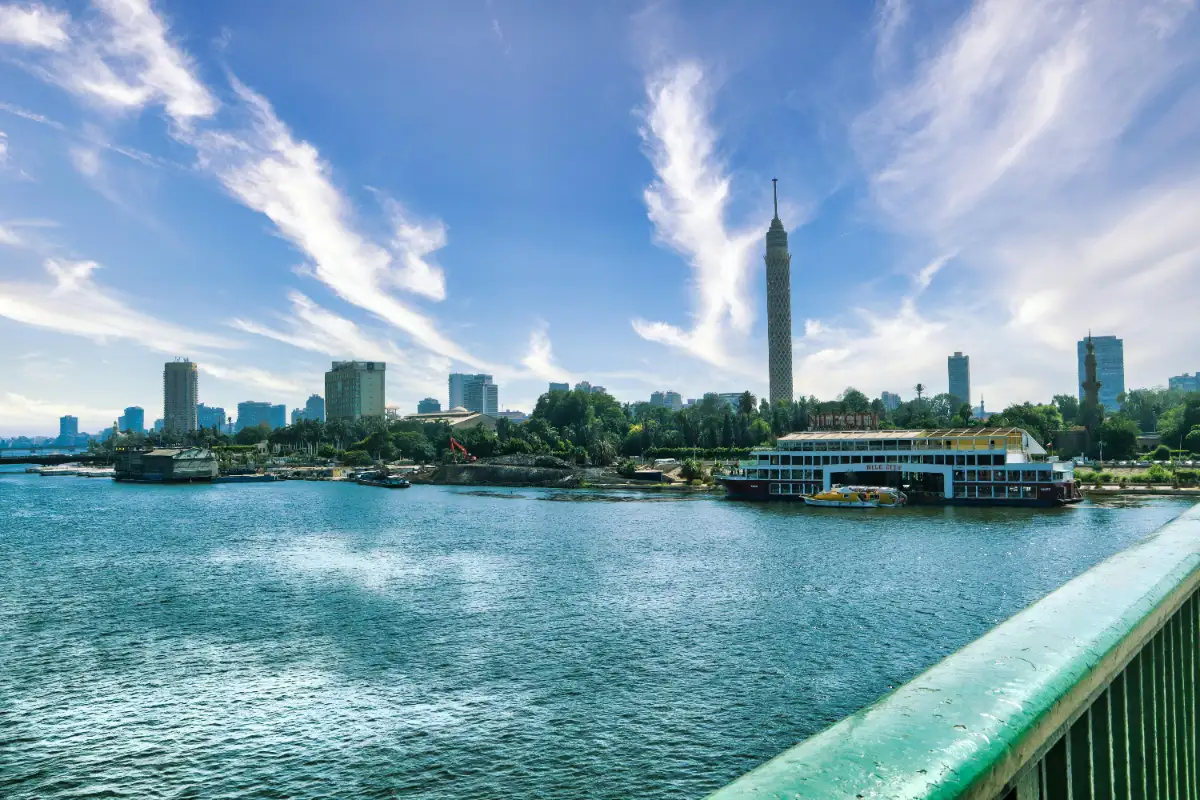
The Cairo Experiences That Deserve Every Word Written About Them and Then Some
The Grand Egyptian Museum — The Most Important Archaeological Collection on Earth, Finally in a Building Equal to Its Contents
The Grand Egyptian Museum, which opened to full capacity visitors in 2023 after nearly two decades of construction and anticipation, sits at the foot of the Giza Plateau approximately two kilometres from the Great Pyramid and houses a collection of over one hundred thousand ancient Egyptian artefacts, the largest such collection in the world. The museum was purpose built to finally give the treasures of ancient Egypt a home that matches their historical and cultural significance, replacing the beloved but chronically overcrowded Egyptian Museum in Tahrir Square where many of the most important pieces had been stored in conditions that conservators had been uncomfortable with for generations.
The Grand Egyptian Museum's most celebrated section is the complete Tutankhamun collection. For the first time in history, all five thousand artefacts from the tomb of the boy king discovered by Howard Carter in 1922 are displayed together in a single dedicated gallery. The golden funeral mask, the innermost coffin of solid gold weighing one hundred and ten kilograms, the throne with its inlaid scene of Tutankhamun and his wife Ankhesenamun, the alabaster canopic chest, the ceremonial chariots: these objects share a space for the first time since they were placed in the tomb approximately three thousand three hundred years ago, and the effect of seeing the complete funerary equipment of a single ancient life arranged in one room is unlike anything the previous fragmented display in the Tahrir museum could produce.
The Atrium Staircase and the Statues That Welcome You
The approach to the Grand Egyptian Museum's main galleries is organised around a monumental atrium staircase lined with over eighty ancient Egyptian statues drawn from temples, tombs, and royal complexes across the country. The statues are arranged chronologically and represent a compressed visual history of ancient Egyptian royal and divine iconography across three thousand years of artistic development. Walking this staircase slowly, from the earliest dynastic pieces to the later periods, is a fifteen minute introduction to the formal grammar of ancient Egyptian art that makes everything in the galleries beyond it more readable and more specific.
The Giza Pyramids — The Experience That No Amount of Prior Knowledge Fully Prepares You For
The Great Pyramid of Giza is the oldest of the Seven Wonders of the Ancient World and the only one still standing. That fact alone is worth sitting with for a moment before the other facts are added: it was constructed approximately four thousand five hundred years ago, it contains approximately two point three million stone blocks averaging two and a half tonnes each, it was the tallest man made structure on earth for nearly four thousand years, and it was built without the wheel, without iron tools, and without any technology that modern engineers have been able to fully and satisfyingly reverse engineer.
The pyramids are visible from significant distance across the Giza Plateau and the experience of approaching them by road and watching them grow from objects the size of a thumbnail to structures so large that your brain genuinely struggles to process their scale at close range is one of those sensory recalibrations that travel occasionally produces and that no amount of preparation can replicate in advance. The Sphinx, carved from a single outcrop of limestone and sitting in its depression below the eastern face of the Khafre Pyramid, is smaller than photographs suggest and more affecting than any photograph captures.
The Pyramids of Dahshur — The Less Visited Alternative That Tells the Fuller Story
The Pyramids of Dahshur, approximately forty kilometres south of Giza, contain two pyramids of extraordinary historical significance that most Cairo visitors never reach because Giza is more famous and closer to the hotel district. The Bent Pyramid, built by Pharaoh Sneferu around 2600 BCE, shows the visible evidence of a mid construction change of angle that resulted in its distinctive double slope profile, representing a moment of real time engineering problem solving by the ancient builders that makes the finished perfection of the Giza pyramids more rather than less impressive to understand. The Red Pyramid adjacent to it is the world's first true smooth sided pyramid and was completed approximately twenty years before the Great Pyramid. Both are accessible to visitors with significantly fewer crowds than Giza and the Bent Pyramid's interior can be entered on a crawl through the descending passage, an experience that puts you inside ancient construction in a way that Giza's more managed visitor environment does not replicate.
The Cairo That Ten Million Visitors Walk Past Every Year
Al Muizz Street and Islamic Cairo — A Living Museum That Has Never Closed
Al Muizz li Din Allah Street in the heart of Islamic Cairo is the oldest street in Egypt that survives in anything close to its original form and is one of the most densely architecturally significant thoroughfares in the world. It runs approximately one kilometre through the medieval walled city founded by the Fatimid Caliphate in 969 CE and is lined continuously on both sides by mosques, mausoleums, madrasas, caravanserais, and merchant houses from the Fatimid, Ayyubid, Mamluk, and Ottoman periods, representing approximately a thousand years of Islamic architectural development in a single walkable corridor.
The street is most extraordinary in the hour before sunset when the light comes from the west at an angle that turns the carved stone facades of the Mamluk monuments into something that glows from within. The Sultan Hassan Mosque and Madrasa at the southern end of the extended Islamic Cairo district is one of the greatest medieval buildings in the world, a structure whose interior courtyard achieves a quality of monumental silence despite its massive scale that places it in the company of the most affecting religious architecture anywhere on earth.
Walking Al Muizz Street with a guide who knows the specific history of each building, who can open the door of a madrasa that most visitors walk past because it does not have a sign, who can show you the ablution fountain whose marble inlay work took ten years to complete, is the single most concentrated architectural and historical experience available to an ordinary traveller in Cairo, and it costs nothing but time and the willingness to walk slowly.
Coptic Cairo — The Oldest Christian Community in the World, Still Here
Coptic Cairo, concentrated in the Misr al Qadima district south of the medieval Islamic city, is the location of one of the oldest continuously worshipping Christian communities on earth. The Coptic Church of Egypt traces its founding to Saint Mark the Evangelist, who is said to have brought Christianity to Alexandria in approximately 42 CE, making the Egyptian Christian community among the earliest in the world. The Ben Ezra Synagogue, the Hanging Church, and the Church of Saints Sergius and Bacchus, traditionally held to be built above the crypt where the Holy Family sheltered during their flight into Egypt, are all within walking distance of each other in a neighbourhood that receives a fraction of the visitors that the pyramids and the Khan el Khalili market draw, despite containing buildings and traditions of equal or greater historical significance.
The Coptic Museum adjacent to the churches houses the world's most important collection of Coptic art and manuscripts, including the Nag Hammadi Library, a collection of thirteen ancient codices containing early Gnostic Christian texts discovered in Upper Egypt in 1945 and among the most significant early Christian textual discoveries of the twentieth century. A morning in Coptic Cairo, guided by someone with a genuine knowledge of the religious and artistic traditions represented in each building, is one of the most historically layered and least crowded experiences available in the city.
The Hanging Church — Architecture as Theological Argument
The Hanging Church, formally known as the Church of the Virgin Mary, gets its common name from the fact that it is built above the southern gatehouse of the Roman Fortress of Babylon, suspended between two towers on a foundation that lifts the church floor approximately twelve metres above the street level outside. The interior is one of the most beautiful in Egypt: a nave divided by columns salvaged from older structures, a wooden iconostasis of extraordinary intricacy separating the nave from the sanctuary, and icons painted in the specific Coptic style that looks unlike any other Christian artistic tradition and whose visual language, flat, frontal, and gold saturated, carries the particular authority of images that have been prayed in front of for sixteen centuries.
Khan el Khalili — The Market That Has Been Running Since 1382
The Khan el Khalili bazaar in the heart of Islamic Cairo was established in 1382 by the Mamluk emir Djaharks el Khalili as a caravanserai, a rest and trading post for the merchants whose goods moved along the Silk Road through Cairo. Six hundred and forty years later it is still operating as a market, which makes it one of the oldest continuously functioning commercial spaces in the world and gives it a quality of accumulated commercial energy that newer markets simply cannot manufacture.
The Khan is famous and its fame has produced a tourist facing layer of shops selling mass produced papyrus, alabaster figurines, and cotton galabiyyas that are designed for visitors rather than for the Cairenes who also shop here. Getting past that layer requires moving away from the main thoroughfares into the side alleys and interior courtyards where the coppersmiths, the perfumiers, the spice merchants, and the textile sellers operate for a clientele that includes both locals and visitors who know what they are looking for.
The coffee house Al Fishawi at the heart of the Khan has been open continuously for over two hundred and forty years and serves tea and shisha to a clientele that has included everyone from Naguib Mahfouz, who wrote novels at its tables for decades, to ordinary Cairene families using it as a neighbourhood sitting room on a Thursday evening. Sitting at Al Fishawi for thirty minutes with a glass of mint tea and no particular agenda is one of the most legitimately historic things an ordinary traveller can do in Cairo.
Cairo Street Food — The City's Most Honest Conversation With Its Visitors
Cairo's street food culture is one of the oldest, most layered, and most genuinely satisfying in Africa and the Middle East, drawing on thousands of years of agricultural tradition in the Nile Delta and centuries of trade influence from across the Mediterranean, the Arabian Peninsula, and sub Saharan Africa.
Ful medames, slow cooked fava beans seasoned with lemon, garlic, and olive oil, has been the breakfast of Egypt since the time of the pharaohs and is served from copper pots on street corners across Cairo from before dawn until the pots run out. Kushari, the layered dish of rice, lentils, macaroni, fried onion, and spiced tomato sauce that is Egypt's unofficial national dish, is sold from dedicated kushari restaurants that have stripped the dining experience down to its absolute functional core: you say how large, you pay a small amount, you receive a bowl that is more satisfying than anything on the menu of a restaurant three times the price. Liver and spleen sandwiches cooked on charcoal at roadside grills in the Sayeda Zeinab neighbourhood are the dish that Cairo insiders recommend to visitors and that visitors who try them invariably describe as one of the best things they ate in Egypt despite expecting to find this difficult to believe in advance.
A guided Cairo street food tour that moves through at least three different neighbourhoods and three different meal formats is the most calorie efficient cultural education available in the city.
What Every Ordinary Traveller Needs to Know Before Visiting Cairo
The Best Time to Visit Cairo
Cairo's climate is shaped by its position in the Sahara Desert zone and is defined by its extremes. Summer months from June through August bring daytime temperatures that regularly exceed forty degrees Celsius in the city and make outdoor sightseeing physically demanding for most visitors. The cooler months from October through April are by far the most comfortable for the kind of walking, outdoor exploring, and sustained engagement that getting the most from Cairo requires. November through February offer the most moderate temperatures, typically between fifteen and twenty five degrees Celsius during the day with cool evenings that make the outdoor areas of the Khan el Khalili and the Al Muizz Street walking experience most pleasant.
Ramadan, the Islamic month of fasting, transforms Cairo's daily rhythm entirely. During Ramadan the city's restaurants and food stalls are closed during daylight hours and open from sunset with an intensity and a celebratory energy that is unlike anything the city produces at any other time of year. The iftar meal that breaks the fast at sunset is a communal occasion of genuine warmth and the streets between iftar and midnight during Ramadan are among the most atmospheric and most alive that Cairo produces. Visiting during Ramadan requires adjustment but rewards the traveller willing to adapt their schedule to the city's rhythm.
Getting Around Cairo
Cairo has a functioning metro system that covers the main north to south and east to west axes of the city with a reliability and an affordability that makes it the most practical transport option for movement between major areas. The metro connects Giza to Helwan in the south and to the airport connection at Adly Mansour in the east, covers the central areas including Tahrir Square, and is air conditioned in a way that provides genuine relief from the summer heat. Taxis are widely available and should be negotiated by fare or use a metered ride share application. Uber operates in Cairo and provides a more predictable pricing experience for first time visitors unfamiliar with negotiation norms.
The distance between the major visitor sites in Cairo is larger than most first time visitors anticipate and the traffic between them is heavier. A conservative rule is to plan no more than three major site visits in a single day and to allocate generous transit time between each one.
Navigating Cairo as a Solo Traveller or First Timer
Cairo's size and density can feel overwhelming on first contact and the most practical mitigation is a local guide for at least the first day. A guide who knows the metro system, the taxi rates, the best entry time for each major attraction, and the specific alleys in the Khan el Khalili where the quality crafts are located turns a potentially disorienting city into one that is immediately navigable and enormously rewarding. Plan My Experiences is the most reliable way to find a guide of this quality in advance of arrival.
Safety in Cairo
Cairo is a city of twenty two million people and like any urban environment of that scale it contains areas and situations that require sensible awareness. The main tourist areas including the Giza Plateau, Islamic Cairo, Coptic Cairo, and the Khan el Khalili are patrolled and heavily visited and represent low risk environments for ordinary travellers who apply basic urban common sense. The most consistent challenge for first time Cairo visitors is not safety in the physical sense but the intensity of commercial solicitation in the high traffic tourist areas, where persistent offers of tours, transport, and goods can feel overwhelming until you develop a comfortable and good natured method of declining.
Female travellers benefit from dressing modestly in public spaces, particularly in Islamic Cairo and the market areas, with shoulders and knees covered. This is not an unusual request in the cultural context of the city and is met with a corresponding increase in the quality and ease of everyday interactions that most travellers find makes the practical adjustment well worth the minor wardrobe consideration.
Book Your Cairo Experience Through Plan My Experiences
Why Cairo Specifically Requires the Local Expertise That Plan My Experiences Provides
Cairo is the kind of city where the difference between a guide who knows it and a guide who merely knows about it is immediately apparent and completely consequential for the quality of your experience. The door in Al Muizz Street that your guide opens to reveal an interior courtyard from a Mamluk caravanserai that has not changed since the fourteenth century is a door that looks identical to every other door on the street. The specific kushari restaurant in the Sayeda Zeinab neighbourhood where the tomato sauce has been made to the same recipe since 1950 is indistinguishable from the outside from the restaurants that make it from a tin. The specific alcove in the Khan el Khalili where the perfumier stocks genuine Egyptian musk rather than the synthetic version sold in the tourist facing shops is accessible only if you know which alley turns left rather than right after the third copper vendor.
None of this is gatekeeping. All of it is local knowledge, the kind that accumulates in people who have spent years inside the city rather than years studying it from outside. Plan My Experiences is the premier African travel marketplace built specifically to connect ordinary travellers with exactly these people, the most knowledgeable, community embedded, and genuinely expert local guides and experience operators working in Cairo and across Egypt.
How to Find and Book Cairo Experiences Through Plan My Experiences
Visit the Plan My Experiences website and search for Cairo or Egypt. The platform surfaces a curated selection of experiences across the city's most rewarding categories: Grand Egyptian Museum guided visits with Egyptology specialists, Giza Plateau and Dahshur pyramid tours with historical context, Al Muizz Street and Islamic Cairo architectural walking tours, Coptic Cairo historical and religious walking experiences, Khan el Khalili market guides with craft and perfume expertise, Cairo street food tours across multiple neighbourhoods, Nile felucca sailing experiences, and personalised full day Cairo itineraries built around your specific interests, physical pace, and available time.
Every listing includes transparent pricing, full operator information, verified traveller reviews, and direct communication tools. You speak with your guide before arriving, confirm every detail of the experience you have chosen, and step off the plane in Cairo knowing exactly who will be meeting you and why that specific person is the right guide for the specific Cairo you have decided to experience.
For Local Guides and Experience Operators in Cairo
If you lead tours of the pyramids, Islamic Cairo, Coptic Cairo, the markets, the museums, the Nile, or any other aspect of this extraordinary city, Plan My Experiences gives you direct access to a global audience of ordinary travellers who are choosing to go beyond the standard Egypt itinerary and engage with Cairo as the living, layered, impossible city it actually is.
Listing your experience on the platform is completely free. You set your own pricing, manage your own availability, and present your experience in your own voice. Plan My Experiences takes a fair commission only on confirmed bookings, which means the platform's growth is built entirely on the quality of what its operators deliver. Revenue stays in Cairo, with the guides and the families and the small businesses that make this city what it has always been: the most generous, most exhausting, most rewarding urban experience in Africa, freely given to anyone who shows up ready to receive it.
Cairo Has Been Waiting for You Longer Than You Have Been Alive
Unique things to do in Cairo, Egypt are not a finite list that you can exhaust in a week or a month or a year. This is a city that has been accumulating experiences worth having since before the concept of tourism existed and it has no intention of running out. The ordinary traveller who arrives here with an open schedule, a good guide, and the willingness to follow a sound or a smell or a recommendation down an alley that was not in any itinerary is the traveller who comes home with a version of Cairo that belongs to them rather than to a brochure.
Stand inside the Grand Egyptian Museum and understand that the civilisation whose objects surround you lasted three times longer than the entire period of recorded history that followed it. Walk Al Muizz Street in the hour before prayer and let the architecture tell you what was being built here while the rest of the world was still deciding what a city was for. Eat ful medames at a street corner at seven in the morning with the rest of Cairo on its way to work and understand that the breakfast you are eating was being eaten in this city before your alphabet existed.
Start your Cairo journey at Plan My Experiences. Find your guide, book your experience, and give one of the world's oldest cities the full attention it has been patiently waiting, for several thousand years, to receive from exactly the right visitor.