More Than Just a Game Drive: 10 Extraordinary Things To Do in the Maasai Mara, Kenya
There is a reason the Maasai Mara appears on virtually every serious Africa travel list ever written. It is not just one of the greatest wildlife destinations on the planet. It is the kind of place that gets under your skin, rearranges your sense of what is possible in the natural world, and leaves you planning your return visit before you have even boarded the plane home.
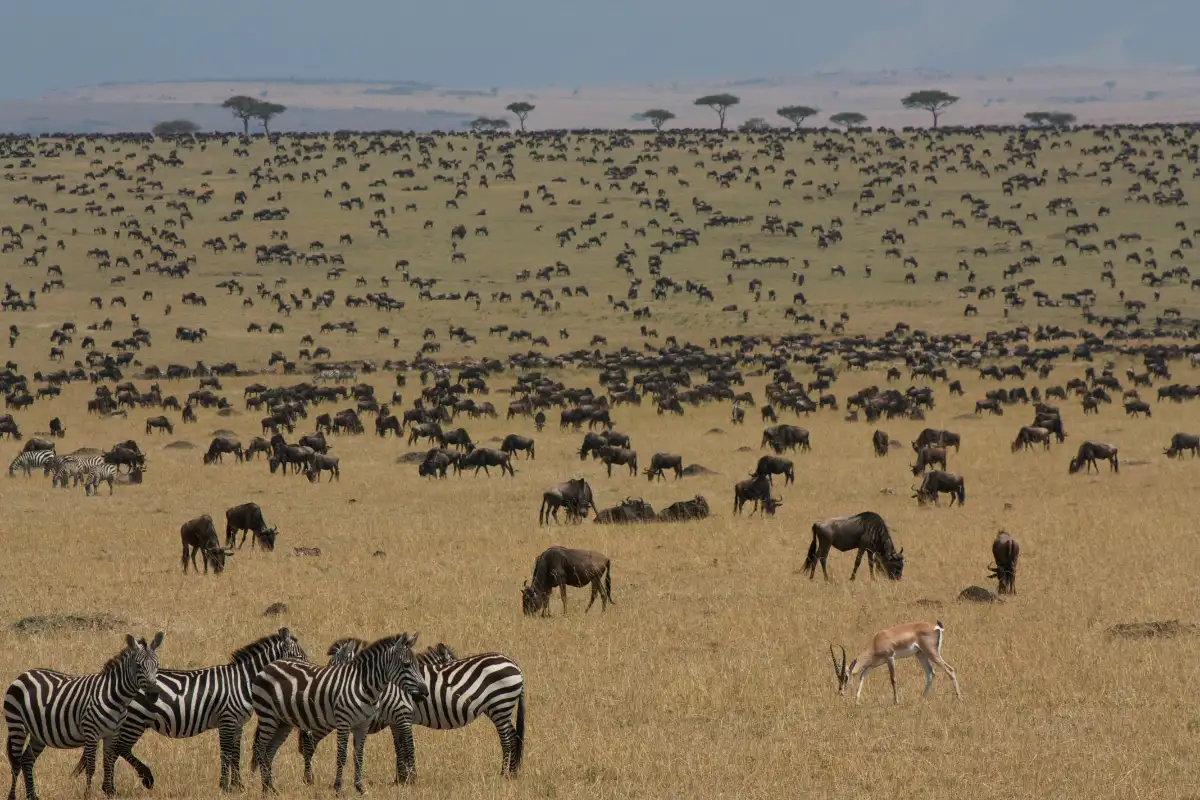
Spanning approximately one thousand five hundred square kilometres in southwestern Kenya, the Maasai Mara National Reserve sits at the northern end of the greater Serengeti ecosystem. The landscape shifts dramatically from open golden grasslands to riverine forests, swamps, and rolling hills. The wildlife density here is extraordinary year round, but during the months of the Great Migration, roughly July through October, the Mara transforms into what many naturalists have called the greatest wildlife show on earth.
But here is what the brochures often fail to tell you. The Maasai Mara is far more than a place you drive through in a safari vehicle. It is a landscape rich with culture, adventure, silence, history, and genuine human connection. The ten experiences in this guide represent the very best of what the Mara has to offer, from the iconic to the deeply personal, and every single one of them is worth building your itinerary around.
1. Witnessing a Great Migration River Crossing
The Single Most Dramatic Wildlife Event on Earth
If there is one experience in the Maasai Mara that sits above all others in terms of raw, unfiltered natural spectacle, it is the Great Migration river crossing at the Mara River. Between July and October, more than one and a half million wildebeest, accompanied by hundreds of thousands of zebra and gazelle, make the perilous crossing from Tanzania's Serengeti into Kenya's Mara in search of fresh pasture.
The crossings themselves are sudden and violent. The animals pace along the riverbank for hours, sometimes an entire day, before something triggers the first wildebeest to leap into the dark water below. Within seconds, thousands follow in a chaotic torrent of bodies, hooves, and foam. Waiting below the surface are Nile crocodiles, some of the largest in Africa, and on the opposite bank lions and leopards often position themselves to ambush exhausted animals as they emerge.
How to Position Yourself for a Crossing
No crossing is guaranteed on any given day, which is actually part of what makes witnessing one so rewarding. A knowledgeable guide who knows the river well is absolutely essential. The Mara Triangle and the Ol Kiombo crossing points are among the most reliable areas. Plan to spend a full day at the river rather than an hour, bring snacks and water, and prepare yourself for the possibility that nothing happens and you go home having spent one of the most quietly suspenseful days of your life watching a river. When it does happen, you will understand immediately why people travel from every corner of the world for exactly this moment.
2. Hot Air Balloon Safari Over the Mara Plains
A Sunrise Perspective That Cannot Be Replicated
There are few ways of seeing the Maasai Mara that rival a hot air balloon flight at dawn. Rising silently above the plains as the African sun breaks over the horizon, with herds of wildebeest and zebra stretching to the edge of your vision, is an experience that belongs in an entirely different category from anything you can do on the ground.
Balloon safaris in the Maasai Mara typically launch just before first light and last between forty five minutes and one full hour depending on wind conditions. You will drift low over the treetops at times, watching lion prides at rest, and rise high enough to see the full curve of the Mara River snaking through the landscape below. After landing, a champagne bush breakfast is served in the open air, which makes for one of the most civilised and memorable mornings imaginable.
Booking and What to Expect
Multiple operators offer balloon safaris in the Mara and prices generally range from four hundred and fifty to six hundred US dollars per person. The experience is suitable for most adults and children above the age of seven. Dress in layers, charge your camera the night before, and leave early enough to reach the launch site in time for a full safety briefing.
3. A Walking Safari in the Maasai Mara Conservancies
Getting Off the Vehicle and Into the Wild
There is a particular kind of courage and attention that waking up inside the ecosystem on foot demands of you. A guided bush walk in the Maasai Mara conservancies surrounding the main reserve is one of the most immersive and intimate ways to experience the African wilderness. Without the barrier of a vehicle, your senses open up entirely. You notice the texture of elephant dung that tells your guide how recently the herd passed through. You hear the alarm call of a hornbill warning of something moving in the distance. You feel the dry grass against your legs and the heat of the earth rising through your boots.
Where Walking Safaris Are Permitted
Walking safaris are not permitted inside the main Maasai Mara National Reserve but are available in the private conservancies that surround it, including the Olare Motorogi Conservancy, the Naboisho Conservancy, and the Mara North Conservancy. These conservancies are home to the same extraordinary wildlife and operate under strict low density tourism models that make the experience feel genuinely exclusive. Your walk is led by a trained Maasai guide and an armed ranger, both of whom can read the landscape in ways that will quietly astonish you throughout the walk.
4. Night Game Drives in the Private Conservancies
A Completely Different Africa After Dark
The Africa you see during a daytime game drive and the Africa that exists after the sun goes down are genuinely two different worlds. Night game drives, available exclusively in the private conservancies adjacent to the main reserve, reveal animals and behaviours that most safari travellers never get to witness. Leopards become active and visible as they patrol their territories. Aardvarks emerge from their burrows to feed on termite mounds. Civets, genets, servals, and the rarely seen aardwolf go about their nocturnal business in the beam of your guide's spotlight.
What Makes Night Drives Special
Night drives in the Maasai Mara conservancies are conducted in open sided vehicles with a handheld spotlight operated by your guide. The experience is quiet and often strangely intimate. The darkness strips away the familiar landmarks of the daytime landscape and replaces them with something far older and more elemental. Most guests describe night drives as unexpectedly moving rather than frightening. Book through your conservancy lodge as night drives are not offered by all camps and require advance arrangement.
5. Visiting an Authentic Maasai Village
A Cultural Experience That Enriches Everything Else
The Maasai Mara takes its name from the Maasai people who have called this landscape home for centuries. A visit to a traditional Maasai village, or manyatta, is one of the most meaningful things you can do during your time in the Mara, provided the visit is arranged responsibly and the community benefits directly from tourism.
A well organised village visit gives you insight into the architecture of traditional Maasai homes built from mud, cow dung, and grass, the significance of cattle in Maasai culture and economy, traditional medicine practices, beadwork, and the role of age sets in structuring Maasai society. You will often be invited to watch the adamu, the famous jumping dance performed by Maasai warriors, and to purchase handmade jewellery and crafts directly from the artisans.
How to Ensure Your Visit is Ethical
Ask your camp or lodge to arrange a visit through a vetted community partnership rather than approaching villages independently. Ensure that a portion of the fee you pay goes directly to the community. Avoid camps that treat village visits as a performative show rather than a genuine cultural exchange. The Maasai have an extraordinarily rich living culture and their relationship with the land that surrounds the Mara is inseparable from the conservation story of the entire ecosystem.
6. Photography Safari in the Maasai Mara
One of the Greatest Wildlife Photography Destinations on Earth
The light in the Maasai Mara is extraordinary. The open savannah landscape, the golden hour that lasts longer here than almost anywhere else in Africa, and the sheer density of wildlife in natural undisturbed behaviour make the Mara a destination that serious wildlife photographers return to year after year.
A dedicated photography safari is different from a standard game drive. Your guide understands angles, light direction, and animal behaviour in relation to your lens. Vehicles are positioned for optimal light rather than simply for proximity. The pace is slower and more deliberate. You may spend an hour with a single cheetah mother and her cubs rather than ticking off a checklist of sightings.
Tips for Capturing the Mara at Its Best
Shoot during the golden hour, the first hour after sunrise and the last hour before sunset, when the light is warm and directional and animal activity is at its peak. A telephoto lens of at least three hundred millimetres is recommended for wildlife, though a wide angle lens is invaluable for capturing landscape context. Consider a beanbag mount for stabilising your camera on the vehicle window. Most importantly, put the camera down occasionally and simply watch. Not everything needs to be photographed to be remembered.
7. Big Five Tracking on a Classic Game Drive
The Foundation of Any Great Mara Safari
For all the variety of experiences the Mara offers, the classic full day game drive remains one of the great pleasures of African travel and nowhere in Kenya does it better than the Maasai Mara. The Big Five including lion, leopard, elephant, buffalo, and rhino are all present in the reserve and can theoretically be encountered on a single drive, though each sighting carries its own weight and its own story.
How to Make Your Game Drive Count
The quality of a game drive in the Maasai Mara depends almost entirely on the quality of your guide. Look for guides who have grown up in or near the Mara, who speak the landscape like a first language, and who prioritise the welfare of the animals over the proximity of the vehicle. A great guide will take you beyond the Big Five and into the extraordinary world of smaller creatures: the dung beetle rolling its perfect sphere, the lilac breasted roller blazing like a stained glass window in an acacia tree, the honey badger that fears nothing and answers to nobody.
8. Sundowner Drinks on the Mara Plains
An Evening Ritual That Belongs to This Landscape
There is a time in the late afternoon in the Maasai Mara when the sky turns the colour of hot metal and the shadows stretch so long they seem to reach forever across the plain. This is sundowner hour. Many camps and conservancy lodges in the Mara offer sundowner experiences, where guests are driven to a scenic viewpoint or simply stop on an open stretch of grassland, fold out a table and chairs, and watch the Mara light up in the last moments before dark.
Cold drinks, warm canapés, and the sound of lions coughing somewhere in the middle distance. It is the simplest and in many ways the most complete version of what an African safari evening can be.
9. Fly Camping Under the Mara Stars
Sleeping Inside the Wild
For the traveller who wants to go a step further than the lodge or tented camp, fly camping in the Maasai Mara conservancies offers something rare and genuinely unforgettable. A fly camp is a temporary, minimal camp set up in the bush by a team of guides and rangers for one or two nights. You sleep in a simple tent with a cot, a lantern, and the unmuffled sounds of the African night around you.
What to Expect on a Fly Camp Night
There are no walls between you and the bush. You will hear hyena calls, the distant roar of lions, and the rustle of something moving close to your tent in the dark. An armed ranger sits by the campfire throughout the night. Meals are prepared on an open fire and eaten under an open sky. Fly camping is not for everyone but for those who want to feel the full weight of the Mara without a generator humming in the background, it is the most authentic night you will ever spend in Africa.
10. Exploring the Mara Triangle
The Quieter and Often More Rewarding Side of the Reserve
The Mara Triangle is the western portion of the Maasai Mara National Reserve, separated from the main reserve by the Mara River and managed independently by the Mara Conservancy. It receives significantly fewer visitors than the main reserve which means the game viewing here is often more exclusive and more peaceful.
Why the Mara Triangle Deserves Its Own Day
The triangle has some of the most dramatic landscape in the entire Mara ecosystem. Rolling hills, dense riverine forest, and open plains combine to create a varied habitat that supports an exceptional diversity of wildlife. The Mara River crossing points in this section of the reserve are among the most spectacular and the roads are generally far less congested than those in the eastern Mara during peak season. If you are spending three or more nights in the Mara, dedicating at least one full day to the triangle is strongly recommended.
Getting to the Mara Triangle
The Mara Triangle is accessed via a bridge crossing over the Mara River near Mara Serena Lodge. Most camps and lodges in the main reserve will include triangle crossings as part of their game drive programming on request. Some visitors choose to stay on the triangle side specifically for the combination of reduced crowds and outstanding wildlife density.
Planning Your Maasai Mara Trip: Essential Tips
Best Time to Visit
The Maasai Mara is genuinely rewarding year round, but the peak Great Migration period from late July through October is when the reserve operates at the height of its power. January through March offers excellent big cat activity as the grass is short and predators are visible from great distances. April through June is the long rainy season and while roads can become difficult, the park is at its greenest and most atmospheric and accommodation rates drop significantly.
Where to Stay
The choice between staying inside the main Maasai Mara National Reserve and staying in one of the surrounding private conservancies is one of the most important decisions you will make when planning your trip. The conservancies offer lower vehicle and guest density, the ability to do walking safaris and night drives, and a more exclusive overall experience. The main reserve offers unmatched wildlife concentration during the migration and is often more accessible to a wider range of budgets. For the ideal combination, consider spending two nights inside the reserve and two nights in a conservancy.
Getting There
The most common way to reach the Maasai Mara is by scheduled light aircraft from Wilson Airport in Nairobi. The flight takes approximately forty five minutes and lands at one of several airstrips within or adjacent to the reserve. Driving from Nairobi is also possible and takes approximately five to six hours on a road that has improved significantly in recent years, passing through the Great Rift Valley and the Narok highlands.
The Maasai Mara Is Not Just a Place, It Is a Feeling
Every person who spends meaningful time in the Maasai Mara comes home with a version of it they carry permanently. A lion stretched across a termite mound in the late afternoon light. The sound of ten thousand wildebeest crossing a river at once. A Maasai elder explaining the names of the stars while a campfire pops and fades. A cheetah teaching her cubs to hunt in the long golden grass.
The ten experiences in this guide are not just activities to fill an itinerary. They are doorways into a landscape that has been shaped over millions of years into something genuinely irreplaceable. The Maasai Mara rewards patience, curiosity, and a willingness to be surprised. Show up with those qualities and it will give you more than you ever thought to ask for.
Book your trip. Stay longer than you think you need to. And whatever you do, do not spend the whole time looking at the screen.